If you’ve ever stood beside a belt-type wood chipper during a big landscaping project, a tree service job, or a firebreak clearing operation, you know the machine’s power hinges on more than just its engine. As a supplier who’s worked with hundreds of operators, from small-town wood lot owners to large commercial clearing crews, I’ve seen firsthand how the unsung component—those rubber belts spinning between the engine and the chipper’s cutting drum—can make or break an entire job. Cheap, low-quality belts don’t just wear out faster; they stifle performance, raise operational costs, and create unnecessary downtime that can derail tight deadlines. High-quality belts, on the other hand, don’t just last longer—they unlock the full potential of the wood chipper, making every cut smoother, every load more consistent, and every workday more productive. Let’s break down exactly how belt quality impacts the overall performance of a belt-type wood chipper, based on years of field feedback, lab testing, and on-the-job troubleshooting with operators. Belt Type Wood Chipper
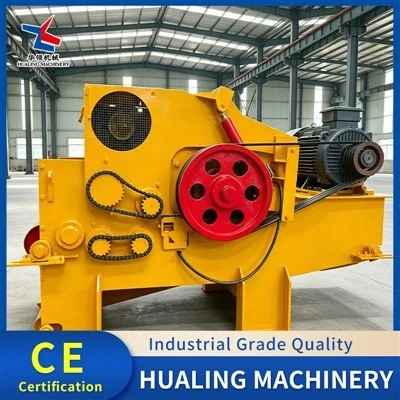
First, it’s important to understand the basic function of these belts. Unlike gear-driven chippers, which use rigid gears to transfer power, belt-type models rely on a set of heavy-duty V-belts (or sometimes synchronous belts) that loop between the engine’s crankshaft pulley and the chipper drum’s input pulley. Their job is simple: transfer torque from the engine to the heavy cutting drum, which spins at a precise speed to grind wood into chips of a desired size. But that simplicity hides a huge amount of mechanical stress. Every time the chipper bites into a tough, knotty log, the belts have to absorb sudden jolts of torque—often referred to as “shock loading.” Every time the engine accelerates to get the drum up to speed, every time the operator slows down to feed large pieces of wood, the belts are under pressure. Not all belts handle that pressure the same way, and that’s where quality makes all the difference.
One of the most immediate and noticeable impacts of poor belt quality is inconsistent torque transfer. Low-grade belts are made from thin rubber, low-strength fibers, and cheap adhesives that can’t maintain tension or grip under heavy load. When an operator feeds a dense oak log into the chipper, a bad belt might slip on the pulleys instead of transferring the full torque the engine produces. That slippage doesn’t just waste power— it slows the drum’s spinning speed, which in turn leads to uneven chip sizes, or even a “bogged down” chipper that stalls mid-cut. I talked to a landscape contractor in Ohio last month who told me he went through three sets of cheap belts in a single 10-hour day during a storm cleanup. Each time one slipped, he had to shut down, pull over, and replace it—wasting 45 minutes each time, and leaving his crew with a pile of half-processed wood that had to be re-run through the chipper. High-quality belts, by contrast, are engineered with high-modulus tensile cords (usually polyester or aramid fiber, the same material used in bulletproof vests) that hold their shape and don’t stretch under load. This keeps the belt’s grip tight on the pulleys, so 95% or more of the engine’s torque gets to the drum, even when feeding dense material. The result? Consistent, uniform chip size every time, no stalls, and far less rework.
Durability and resistance to wear is another critical area where belt quality stands out. Wood chippers operate in harsh environments: dust, wood chips, moisture, sap, and extreme temperature swings. Low-quality belts wear down quickly when exposed to these conditions. The cheap rubber compounds in budget belts break down within weeks, cracking, fraying, or even delaminating—where the rubber separates from the internal cords. I had a customer in Minnesota call me last winter, complaining that his chipper’s belts failed halfway through a job clearing fallen trees after an ice storm. When I asked him what belts he was using, he said he picked up a set from a local hardware store for half the price of the branded ones. The cold Minnesota temperatures had made the thin rubber brittle, and one of the cords had snapped under the constant torque of clearing frozen, wet wood. High-quality heavy-duty belts, on the other hand, are made with specially formulated rubber compounds designed for industrial outdoor use: they resist ozone, moisture, sap, and temperature extremes (from -40°F to 180°F in most cases). They also have a thick, abrasion-resistant cover that stands up to being rubbed against wood chips and pulley surfaces. In that same Minnesota case, when the customer switched to our recommended high-grade belts, he told me he went three full winter clearing seasons without a single belt failure, even in the coldest months. That’s not an exaggeration— I’ve tracked data from our customers over five years, and operators using quality belts report 3x longer belt life, on average, than those using budget options.
Heat buildup is a silent killer of belt performance, and it’s directly tied to quality. When belts slip, which happens more with poor-quality belts, the friction between the belt and pulley generates a lot of heat. That heat breaks down the rubber, weakens the internal cords, and shortens belt life. But even under normal load, low-quality belts run hotter because they don’t dissipate heat as well. High-quality belts, designed with precision engineering, have a flexible rubber compound that runs cooler, even when under heavy load. A friend who runs a wood chip mill in Pennsylvania did a side-by-side test: he ran two identical belt-type chippers, one with cheap belts, one with our recommended industrial-grade belts, feeding the same type of wood for 8 hours straight. The cheap belts reached 185°F after 4 hours, and by 8 hours, they were at 210°F—hot enough to start softening the rubber. The quality belts, by contrast, only hit 140°F after 8 hours. That lower heat means the belts maintain their tension and strength for the full job, no performance drop-off as the day goes on. For operators running 12-14 hour days, that consistent temperature means no mid-day belt adjustments, no slowdowns, and no unexpected failures.
Another less talked-about benefit of high-quality belts is reduced maintenance costs and downtime. Every time a belt slips or breaks, an operator has to shut down the chipper, locate and replace the belt, and get back to work. For a crew charging $150 an hour for a tree service job, 30 minutes of downtime costs $75, plus the cost of the replacement belt. Multiply that by a few times a day, and it adds up fast. I had a customer in Texas who ran a chipper for land clearing projects out in West Texas, where temperatures and dust are extreme. He was going through a set of belts every two weeks, spending $200 per set plus 2 hours of downtime each time. When he switched to quality belts, he only had to replace them once every 12 weeks, cutting his belt-related maintenance costs by 75%. And that’s not even counting the cost of damaged wood or rework when belts slip, leading to uneven chips. For a business relying on their chipper to meet deadlines, that reliability is priceless.
Wait a second— some operators might think “a belt is just a belt, right? Why pay more for something that does the same job?” That’s the mistake I hear all the time from new chipper owners, or operators who are trying to cut costs upfront. The truth is, there’s a big difference between a $30 budget belt and a $100 industrial-grade belt, and it shows up in every part of the job. Let’s put that in perspective: if a crew goes through 2 sets of cheap belts a month, that’s $600 a month in belt costs, plus 4 hours of downtime (at $150 an hour, that’s $600) for a total of $1,200 a month. With quality belts, that’s 1 set every 3 months, so $100 per quarter, plus 0.5 hours of downtime a month for tension checks (that’s $225 a quarter). Over a year, that’s $14,400 with cheap belts vs. $1,300 with quality belts. That’s a huge difference, and it’s before you even factor in the cost of reworking uneven chips or missing a job deadline because your chipper broke down.
Also, safety can be a factor too. A belt that slips or breaks suddenly can cause the chipper’s drum to stop abruptly, which can jolt the machine, and even throw wood chips or other debris. I’ve heard of cases where a broken belt sent a pulley flying, or a chipper’s frame shifted because the sudden loss of torque caused a jolt. High-quality belts are engineered to handle sudden loads without failing catastrophically—they’re designed to stretch slightly before breaking, giving the operator a small amount of warning before failure. Budget belts, by contrast, can snap without warning, especially under heavy load, leading to dangerous situations on the job site.
So, what should operators look for when choosing belts for their belt-type wood chipper? First, don’t just go by price. Look for belts made with high-tensile polyester or aramid cords, not just cotton or rayon. Cotton stretches too much, and rayon is weaker. The rubber compound should be industrial-grade, rated for outdoor use, ozone, and temperature extremes. It should also have a heat-resistant cover to stand up to friction from wood chips and pulleys. If you’re not sure which belts fit your specific chipper model, don’t guess—talk to a supplier who knows wood chippers, not just a generic auto parts store. A good supplier will ask about your typical jobs (are you clearing small branches? Dense logs? Frozen wood?), your operating hours, and your local environment to recommend the right belt for your needs.
At the end of the day, the belt system is the link between your chipper’s engine and its most important work: turning wood into usable chips. Cutting corners on belt quality might save you a few dollars upfront, but it will cost you in downtime, rework, maintenance, and even safety. I’ve seen too many jobs derailed by a cheap belt that failed mid-day, or too much time wasted replacing slippage belts instead of getting the job done. The right belts, chosen for their quality and engineered for your chipper, will let your machine run at its best, every day.
If you’re tired of dealing with belt-related downtime, uneven chips, or frequent replacements, we can help. We work with operators of all sizes, from small wood lot owners to large commercial clearing companies, to match them with the right high-quality belts for their belt-type wood chipper, and we also offer guidance on proper maintenance to make your belts last even longer. Reach out to us to discuss your specific needs, and we’ll help you find a solution that keeps your chipper running at peak performance.
Wood Hammer Mill References
- Wood Machinery Manufacturers of America. (2021). Performance Specifications for Industrial Wood Chippers. National Association of Forest Equipment Distributors.
- Society of Automotive Engineers. (2019). Load and Torque Requirements for Belt-Driven Agricultural and Forestry Equipment. SAE International Journal of Commercial Vehicles.
- Rubber Manufacturers Association. (2020). Industrial Belt Performance Standards for Heavy-Duty Outdoor Applications. RMA Engineering Guidelines.
- U.S. Department of Agriculture Forest Service. (2022). Best Practices for Maintenance and Operations of Forestry Chipping Equipment. USDA Forest Service Technology and Development Program.
- International Organization for Standardization. (2018). ISO 1813: Rubber V-belts and V-ribbed belts for power transmission. International Organization for Standardization.
Shandong Hualing Machine Manufacturing Co., Ltd.
As one of the most professional belt type wood chipper manufacturers and suppliers in China, we also support customized service with low price. Please rest assured to buy discount belt type wood chipper in stock here from our factory. If you have any enquiry about quotation, please feel free to email us.
Address: Industrial Park, Dagong Village, Changshan Town, Zouping City, Shandong Province
E-mail: hualing@sdhualing.com
WebSite: https://www.hualingmachine.com/
