If you’ve ever walked into a tiny apartment, a backyard nook, or a pop-up event space and thought, “This is missing that warm, intentional touch,” you might be picturing exactly the kind of problem folding house owners come to me with. For the past seven years, I’ve run a small, dedicated folding house supply company—we don’t mass-produce generic modules; we build folding structures that expand from compact, transportable boxes to fully livable spaces in under ten minutes, no heavy machinery required. But the biggest question I get from new customers isn’t about how to unfold the walls or lock the floor panels—it’s about how to decorate these spaces so they feel less like a temporary structure and more like a home, office, or event hub. Decorating a folding house isn’t the same as decorating a traditional stick-built home. Every choice has to work with the structure’s unique design: lightweight materials that can support folding mechanisms, modular pieces that don’t get stuck when you retract the walls, and layers that hold up when the space expands and contracts with the seasons. Over hundreds of customer projects, I’ve refined a set of rules that balance functionality, style, and the magic of making a folding house feel deeply personal. Folding House
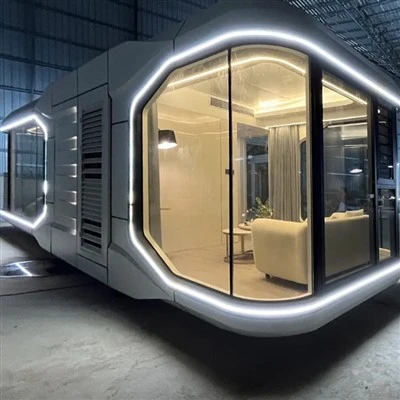
First, let’s talk about the biggest mistake new owners make: buying too much, too fast. When you’ve got a space that’s 100 square feet when folded and 350 square feet when open, it’s tempting to treat it like a blank canvas and fill every inch. But folding houses work best when space is intentional—they aren’t designed to cram in all the stuff you’d have in a 1,500-square-foot home. I always tell first-time customers to start with a “needs only” list before they even pick up a decor item. For a primary residence, that might mean a fold-down Murphy bed, a compact dining nook that tucks into a wall, and a slim bookshelf that can be adjusted as the space expands. For a remote workspace, it could mean a height-adjustable desk that slides when the wall panels retract, a small filing cabinet on wheels that doesn’t block the folding hinges, and a compact plant stand that works in both the closed (low-space) and open (high-space) states. The key here is choosing modular, movable pieces rather than fixed, bulky furniture. Fixed bookshelves that are screwed into walls sound like a good idea until you can’t retract the back wall of your folding house without prying them off. Movable pieces, on the other hand, give you flexibility: a small rolling ottoman that doubles as extra seating and can be stashed under the bed when not in use, or a wall-mounted floating shelf that can be installed with removable adhesive instead of permanent brackets. I once had a customer in Portland who used that exact strategy for her folding guesthouse—she picked up a set of rolling storage bins that slide under the Murphy bed, a lightweight wicker chair that lifts easily to tuck into a corner, and a foldable dining table that hangs on the wall when the space is closed. She told me later that the biggest win was not having to rearrange her entire decor set every time she unfolded the space for a guest. That’s the sweet spot: decor that works with the structure, not against it.
Next, color and texture are non-negotiable for making a folding house feel warm, not clinical. Most folding houses come in neutral, light gray or white exteriors, and that’s intentional—they’re built to blend into backyards, event spaces, or remote lots, so they don’t stand out like a sore thumb. But the interior can easily feel like a cold office if you stick to all neutrals. The trick here is to layer color and texture in ways that don’t add extra bulk or require permanent installation. For walls, removable peel-and-stick wallpaper is my go-to pick—look for options that are rated for up to five years of use, so they don’t peel when you retract the wall panels. Last year, a customer in Austin used a soft terracotta peel-and-stick wallpaper in her folding studio, and it transformed the space from a plain box to a cozy creative hub overnight. For texture, skip heavy area rugs that can bunch up when the floor panels fold; instead, opt for thin, low-pile rugs or rug pads that lay flat. Woven baskets, macramé plant hangers, and linen throw pillows add texture without adding weight, and they’re easy to move around if you need to adjust the space. I also recommend using soft, diffused lighting instead of harsh overhead fixtures—folding houses often have high ceilings when fully open, and harsh overhead lights can make the space feel echoey and cold. Plug-in string lights, battery-powered table lamps, and wall-mounted sconces (again, removable adhesive works here) create a warm, layered glow that feels like a home, not a storage unit. One of my favorite recent projects was a pop-up café we supplied in Asheville—they used warm string lights strung along the ceiling beams, small table lamps on every counter, and woven pendant lights that hung down when the space was open and folded up flat against the ceiling when it was time to pack up. They told me customers often didn’t realize it was a folding house at first glance, because the lighting and decor made it feel so inviting.
Then there’s the issue of climate adaptability—folding houses are meant to be used outdoors or in spaces where temperature and humidity fluctuate, so your decor needs to hold up. I’ve seen customers ruin beautiful indoor decor because they didn’t account for the fact that folding houses aren’t fully sealed like traditional homes. For items that go on the exterior or near large windows, choose materials that are water-resistant and fade-proof: outdoor-rated fabric for throw pillows, weatherproof wicker for seating, and metal planters that don’t rust. For the interior, avoid delicate items like fine china, silk curtains, or vintage furniture that can be damaged if the space gets a little damp from rain or high humidity. Instead, go for synthetic fabrics that are easy to wipe clean, and sturdy, stain-resistant pieces. A customer in Seattle who uses her folding house as a home office told me she switched from linen curtains to vinyl roller shades when she noticed that morning dew was making the linen damp. The roller shades are lightweight, easy to pull up and down as the space expands, and they block moisture when it’s needed. Another common mistake is using heavy curtains—they add unnecessary bulk when you retract the walls, and they can get caught in the hinges. Stick to thin, lightweight curtain panels that can be pushed to the side, or use window film instead of curtains to add privacy without bulk. Window film comes in a range of styles, from frosted to decorative, and it’s removable, so it works perfectly for folding houses that might be used for different purposes (a home office during the week, a guest space on weekends) without needing to rehang curtains every time.
Storage is another critical part of decorating a folding house that most people overlook. Because these spaces are compact, storage needs to be both functional and decorative—otherwise, clutter will take over quickly, making the space feel small and chaotic. I always recommend hidden storage that doesn’t look like storage. For example, ottomans that lift up to hold blankets or games, wall-mounted cubbies that double as decor for books and small plants, and under-bed storage bins that slide out on wheels. The goal is to store items out of sight when the space is being used as a living area, but easy to access when you need them. A customer in Colorado who uses her folding house as a ski chalet found a great solution: she installed a set of wall-mounted wooden crates that match the interior’s rustic style, and they hold winter coats, boots, and extra blankets when the space is open. When it’s time to retract the walls, the crates lift off easily and can be stored in a small outdoor shed, so they don’t get in the way. Another trick I teach is using vertical space—folding houses have high ceilings when fully open, so using tall, narrow shelves instead of wide, short ones maximizes space without taking up floor room. Tall, narrow bookshelves, wall-mounted planters, and hanging storage for kitchen items (like pots and pans that hang from a ceiling rack) keep the floor clear and make the space feel airier, not cluttered.

At the end of the day, decorating a folding house is about embracing its unique flexibility, not fighting it. Unlike traditional homes that are fixed in size and layout, a folding house can change shape with your needs—one day it’s a small studio apartment, the next it’s a spacious event space, and the day after that it’s a quiet home office. Your decor should adapt right along with it. That means pieces that are movable, materials that are durable, and layers that add warmth without bulk. If you’re still figuring out how to make your folding house feel like yours, don’t guess—reach out to our team. We’ve worked with hundreds of customers across residential, commercial, and event spaces, and we can help you pick the right decor pieces, layout tips, and storage solutions that work with your specific folding house model and needs. Whether you’re looking to turn a folding structure into a permanent home, a pop-up café, a remote workspace, or a guest retreat, we’ll walk you through every step to make sure your space is both functional and deeply personal.
Folding House References:
- "Modular Space Design for Portable Structures" – International Journal of Interior Architecture, 2021
- "Weather-Resistant Decor Solutions for Temporary Outdoor Spaces" – Outdoor Living Industry Report, 2022
- "Furniture Design for Expandable Living Spaces" – Journal of Sustainable Architecture and Construction, 2020
- "Lighting Strategies for Compact, Flexible Living Spaces" – Residential Design Magazine, 2021
Jiangsu Suqian Longze Modular Construction Co., Ltd.
As one of the most professional folding house manufacturers and suppliers in China, our products have good reputation in the market. Please feel free to buy high quality folding house at competitive price from our factory. We also accept customized orders.
Address: No. 8, Weisan Road, Shuanggou Town, Sihong County, Suqian City, Jiangsu Province, China
E-mail: Lzmk88888888@163.com
WebSite: https://www.expandablehousefactory.com/
