If you’ve ever picked up a roll of dunnage paper—whether it’s 30-inch wide heavy-duty stuff for securing pallets at a warehouse or 12-inch lightweight rolls for small parcel shipments—you know it’s not just a plain roll of paper. It’s a critical part of preventing product damage during transit, and getting it to your facility or job site without crumpling, tearing, or becoming a tangled mess is half the battle. As a dunnage paper supplier who’s been in this game for 12 years, I’ve seen just about every mistake people make when transporting our product, from shoving rolls into a beat-up pickup truck bed to stacking too many layers on a pallet and crushing the core. Today, I want to walk you through exactly how to transport dunnage paper the right way, with tips I’ve picked up from hundreds of customers and our own logistics team. Dunnage Paper
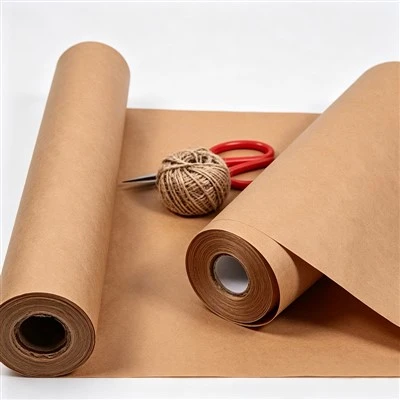
First, let’s start with the basics: what dunnage paper is, and why its transport needs are unique. Unlike regular printer paper, which is thin and stable, dunnage paper is made for two main jobs: filling gaps in palletized freight (so boxes don’t shift) and cushioning fragile items like glassware or electronics. That means it’s often thicker, heavier, and more flexible than standard paper. It also comes on cardboard cores, which are surprisingly fragile. Snap a core during transport, and the entire roll becomes unwieldy, impossible to feed into your dunnage gun, and useless for your team. So every transport step is designed to protect two things: the paper itself, and those inner cores.
Let’s break this down by scenario, because transporting a single roll to a small business is way different than moving a full truckload of 500 rolls to a distribution center. I’ll start with the most common scenario: individual rolls or small batches (under 10 rolls) for pickup or local delivery. This is where most people slip up. If you’re loading a couple of rolls into the back of your SUV or pickup truck, the first rule is never lay them flat. Wait, let me clarify: never lay them flat on a hard, unprotected surface. I’ve had a customer bring back a half-used roll once because he stacked three rolls flat in the bed of his truck, and by the time he got to his job site, the bottom roll had compressed so much it turned into a crumpled brick. Why does that happen? The core supports the paper’s weight when it’s standing upright. When you lay it flat, all the pressure of the roll above sits directly on the paper layers, squeezing out air and leaving them compressed, so you lose 10-15% of the usable length per roll. That’s a huge waste—especially if you’re paying for heavy-duty, high-quality dunnage.
So for small batches, always stand rolls upright. But that doesn’t just mean lean them against the wall of your truck. Secure them. I recommend using a heavy-duty moving blanket or a foam pad to line the side of your truck bed, then tucking rolls between the wheel wells or against the bulkhead. If you have more than two rolls, use two bungee cords to create a “cage” around the top of the rolls, so they don’t slide if you have to brake hard. One of my regular customers, a small appliance repair shop, swears by using a section of PVC pipe cut to fit the width of his truck bed—he stands all his rolls inside the pipe, so they never tip or get scratched by other tools in his truck. That’s a trick I still recommend to anyone moving small amounts. Also, never stack anything on top of the rolls. I’ve seen a customer load a roll of dunnage and a cooler full of lunch, and the cooler dented the roll’s core so bad he couldn’t get the paper to feed through. That’s avoidable—leave the top of the rolls empty, every time.
Now, moving to larger batches: full pallet loads, which is what most distributors, manufacturers, and big retailers order. This is where the real science of dunnage paper transport comes in, and where we see the most damage claims if done wrong. First, how do we wrap the pallets correctly? At our warehouse, we wrap rolls on pallets in two layers of stretch film, but we always stand the rolls upright, aligned with the pallet’s stringers. Why aligned with the stringers? The stringers are the wooden beams that run the length of the pallet, so standing rolls along them means the weight of the pallet is distributed evenly. If you cross-align rolls—standing them the other way—you create weak spots where the pallet can bow, and the rolls in the middle get crushed. Another mistake I see all the time: overstacking pallets. The maximum height for a standard pallet of dunnage paper is 72 inches. That’s about 6 rolls deep, depending on the roll size. Go higher than that, and the weight of the top rolls puts too much pressure on the bottom ones, especially if the ground isn’t perfectly level. Last year, a customer ordered a pallet of 10-inch wide lightweight dunnage, and he stacked it 8 rolls high. By the time it arrived at his warehouse, the bottom two rolls had cores that were bent, and the paper layers at the edge were torn. He sent us photos, and it was a classic case of overstacking.
Then there’s the issue of what you put under the pallet, and how you secure it for long-distance transport. If you’re shipping dunnage paper via semi-truck, make sure the pallets are stacked in the trailer in a way that leaves a gap of at least 6 inches from the side walls, and at least 12 inches from the front and back doors. Why? Trailers swing when they turn, and rolls that are too close to the walls or doors can get scraped or crushed. Also, never place pallets of dunnage paper next to pallets of heavy items like metal parts or concrete blocks. The heavy pallets can shift during transit, and if they crash into your dunnage pallets, the damage is usually irreversible. We always mark our pallets with “light weight” stickers and tell our freight partners to stack heavy pallets on top of lighter ones? Wait, no—wait, dunnage paper is relatively light, so actually, if you have a mixed load, you stack heavier pallets on top of lighter ones, but only if the lighter pallet can support the weight. For dunnage, which is mostly paper, a standard 48×40 pallet of dunnage weighs about 1,200 pounds, so you don’t want anything heavier than that on top of it. Another pro tip we share with our freight customers: use pallet supports (the small plastic or metal pieces that go between pallets to create a gap) if you’re stacking two pallets high. That gap lets air circulate, which prevents moisture buildup—more on that in a minute.
Speaking of moisture, that’s one of the biggest hidden enemies of dunnage paper transport. Paper absorbs moisture like a sponge, and if your dunnage gets wet, it loses its tensile strength—meaning it can’t secure products during transit, which defeats the whole purpose. I’ve had a customer send back an entire truckload of dunnage last year because the driver left the trailer doors open during a rainstorm, and the rolls on the front of the pallet were soaked. The paper was too soft to use, and he had to throw the whole load away. How do you prevent that? First, make sure all pallets are wrapped in waterproof stretch film—we offer that as an optional add-on for all bulk orders, and I can’t recommend it enough, even if you’re just driving a short distance. Second, never store or transport dunnage paper in an unconditioned space for more than 24 hours. If you’re waiting to load a truck, keep the pallets under cover, away from direct rain, snow, or even high humidity. Last year, a food processing plant had a problem with their dunnage rolls getting moldy during a humid summer. The rolls were sitting on a concrete floor in their warehouse for three days before use, and the moisture from the concrete seeped up through the pallet and into the paper. We started advising them to use pallet skids (the plastic ones that lift the pallet 4 inches off the ground) and wrap the rolls, and that fixed the mold issue almost immediately.
Now, let’s talk about what to avoid at all costs when transporting dunnage paper. First, don’t use a regular hand truck to move individual rolls without a strap. A lot of warehouse workers will hoist a roll onto a hand truck by the core, and that bends the core out of shape, making the roll hard to feed into equipment. We recommend using a roll clamp or a lifting strap that goes around the middle of the roll, not the core. Second, don’t expose dunnage paper to extreme temperatures. If you’re transporting a load in a trailer that’s not temperature-controlled during the summer, the heat can make the cardboard cores brittle, and they’ll snap when you try to unload the rolls. Same with freezing temperatures in the winter—cold makes the paper stiff, so it tears easier when you pull it off the roll. For long-distance hauls of more than 2 days, we always advise using a temperature-controlled trailer if possible, even for light rolls.
Another common mistake: not planning for unloading. It sounds small, but if you’re on a job site and you have to carry a roll of dunnage paper up stairs or across a dirt lot, it’s easy to drop it or drag it on the ground. We always tell customers to have a hand truck with a roll attachment on site before the delivery arrives, so you can unload the rolls safely without dragging or dropping. I once watched a new warehouse employee drag a 50-pound roll of heavy-duty dunnage across a concrete floor, and it ripped a 2-foot long section right off the side. That’s 2 feet of paper he can’t use, all because he didn’t plan ahead for unloading.
Let’s wrap this up with a quick checklist, so you have something to reference next time you need to transport dunnage paper. For small batches (1-5 rolls): 1. Stand rolls upright, never flat. 2. Secure with bungee cords or PVC pipe to prevent sliding. 3. Keep all items off the top of rolls. 4. Use a moving blanket to line truck surfaces and prevent scratches. For bulk pallet loads: 1. Stand rolls upright aligned with pallet stringers. 2. Max pallet height 72 inches, never stack higher. 3. Wrap pallets in waterproof stretch film. 4. Leave 6 inches of gap between pallets and trailer walls/doors. 5. Don’t place heavy items near or on top of dunnage pallets. For all transport scenarios: 1. Avoid moisture, extreme temperatures, and rough handling of cores. 2. Have unloading tools on site before delivery.
At the end of the day, transporting dunnage paper isn’t complicated—it’s just about protecting a product that’s designed to protect yours. We’ve spent 12 years perfecting how we package and ship our dunnage, but even the best packaging won’t save it if you’re loading it wrong or exposing it to the elements. If you’re not sure how to transport your specific order—whether it’s lightweight parcel dunnage, heavy-duty industrial rolls, or something in between—our team is here to help. We can send you custom packaging tips, advise on the best transport setup for your job site, and make sure your order arrives in perfect condition, ready to keep your products safe during every mile of transit. If you’re looking to order dunnage paper for your next project, or have questions about transport best practices, reach out to our team today to discuss your needs and get a tailored solution.
Dunnage Paper References:
- Logistics Management Association. Best Practices for Bulk Packaging and Transport of Paper Products. 2021.
- International Warehouse Logistics Association. guidelines for Storing and Handling Paper-Based Packaging Materials. 2022.
- American Society for Testing and Materials. Standard Test Methods for Tensile Strength of Paper for Packaging Use. 2020.
- Dunnage Industry Association. Common Transport Pitfalls for Industrial Paper Packaging Products. 2019.
Zhejiang Xinzhongxin Paper Industry Shares Co., Ltd.
With abundant experience, we are one of the most professional dunnage paper manufacturers and suppliers in China. Please rest assured to buy bulk premium dunnage paper for sale here from our factory. If you have any enquiry about cooperation, please feel free to email us.
Address: NO.391-2, CHANGHE ROAD, CHANGAN, HAINING, ZHEJIANG
E-mail: info@xzxpaper.com
WebSite: https://www.zhongxinluhuan.com/
