Hey there, let’s cut through the noise today and talk about something super practical but often glossed over when you’re picking twill woven fabric for your project: tensile strength. As a twill woven fabric supplier, I get so many questions like “Will this hold up when I wash it 50 times?” or “Is this sturdy enough for workwear that’ll drag on concrete?” Tensile strength is basically the answer to all that, and it’s not just some random number manufacturers throw on a spec sheet—it’s make-or-break for how your fabric will perform, no matter if you’re making jeans, work pants, upholstery, or even tote bags you plan to use daily. Twill Woven Fabric
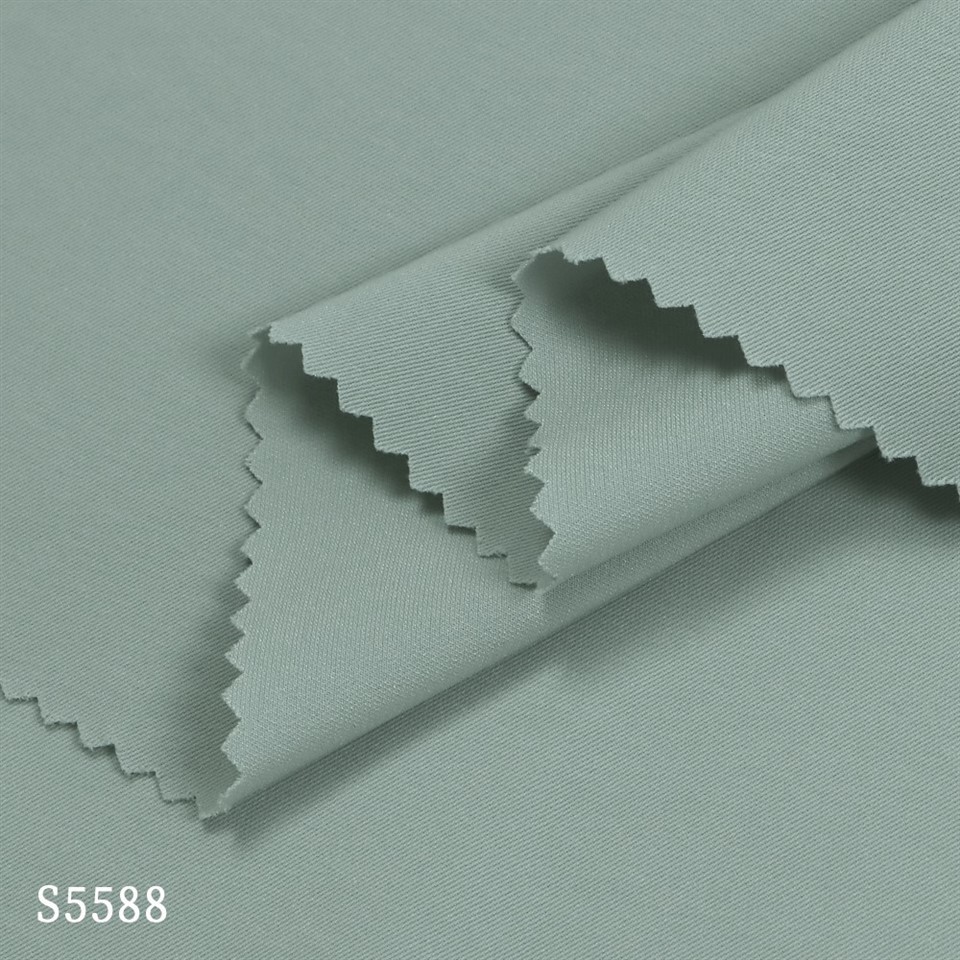
First off, let’s keep this simple, no lab jargon that’ll make you zone out. Tensile strength of fabric is just how much force it can take before it tears or breaks, right? But wait—twill’s different from plain woven (like that basic cotton sheet fabric you used as a kid) because of its weave pattern. Twill uses that diagonal rib: each yarn over or under two (sometimes three) adjacent yarns, instead of plain’s one over one under. That little change is huge for strength, and it’s why twill is the go-to for heavy-duty stuff. I’ve had customers switch from plain to twill mid-project because plain kept tearing at the seams—turns out the weave is half the battle when it comes to tensile strength.
Now, here’s the part that matters most, not just theory, but what I actually see in my stock every day. Tensile strength isn’t a one-size-fits-all number, obviously. It depends on three big things: what fiber the fabric’s made of, how thick the yarns are, and even how tight we weave it. Let’s break that down with examples of the twill we carry, since that’s what I know best. If you’re dealing with cotton twill—super common for jeans, uniforms, chore coats—we’re usually looking at warp tensile strength (that’s the yarns running lengthwise, the stronger side) around 40 to 70 lbf (pounds-force, for anyone who’s never dug into lab terms) per inch of width. Weft, the crosswise yarns, is lower, like 25 to 50 lbf, since the weave pattern gives warp more interlace points, so it doesn’t slip as easy when pulled. Wait, that makes sense for jeans—when you pull jeans along the seam, that’s mostly pulling the warp direction, right? So that higher warp strength is exactly why jeans don’t split after a few wears.
But if you’re using polyester-cotton blend twill, which is way more resistant to stretching and fading, tensile strength jumps to like 60 to 90 lbf warp, 35 to 65 lbf weft. I sell a ton of this blend to workwear companies that have their employees wiping their fabric on equipment daily—this stuff doesn’t tear when someone yanks a stuck tool free, and it holds its shape even after a dozen washes. And for heavy-duty twill, like 12oz denim or upholstery twill? Warp tensile strength can hit 80 to 110 lbf. That’s why you see that thick upholstery twill on restaurant booths—if a kid grabs the edge and pulls, it won’t rip.
Wait, but hold on—there’s a common myth out there that thicker yarn = stronger fabric. Not always, at least not in twill. Let’s say two twills: one with thick, loose cotton yarn woven tight, vs. thinner, high-twist yarn (meaning the yarns are twisted more tightly together) woven a bit looser. The high-twist one usually has higher tensile strength, because the individual yarns don’t snap as easy when pulled. I learned this the hard way a couple years back—we had a client order 14oz twill thinking it’d be indestructible for their utility bags, but it kept tearing along the seam because the yarns were loosely spun. Switched them to 12oz high-twist twill, and they haven’t had a tear complaint since. That’s the stuff that comes from working with fabric daily, not just reading a spec sheet—you can’t trust weight alone, tensile strength is way more specific.
Also, tensile strength doesn’t just apply to pulling the fabric straight. Twill’s diagonal weave means it’s stronger in both directions than plain weave, so bias stretch (when you pull at a 45-degree angle) is actually lower for twill, which is a win for most projects. Plain weave will stretch a lot more on the bias, which is why people avoid it for pants that need to stay fitted. That’s a huge point I don’t see a lot of suppliers explain—tensile strength across angles matters too, not just warp and weft. I had a custom furniture customer last year who was upset that their plain weave upholstery was sagging after a month—we swapped it for a medium-weight twill, and sagging stopped, because the tensile strength in that diagonal direction kept the fabric tight.
Now, let’s talk real-world testing, because I know a lot of people don’t have a lab in their garage to test tensile strength. The standard test for fabric tensile strength is called the grab test, right? Where you clamp a small section of fabric and pull until it breaks, measuring the force needed. Most reputable twill suppliers (me included) provide that test data for every fabric we carry, because it’s non-negotiable. If a supplier tells you “it’s durable” but won’t share tensile strength numbers, that’s a red flag—they’re probably hiding that their fabric is garbage. I once had a small clothing startup ask for a sample of our 8oz twill for their linen shirts (wait, linen twill is a thing!) and they tested it themselves and were shocked at how much stronger it was than the cheap twill they’d been buying from overseas. Linen twill’s tensile strength is lower, around 20 to 40 lbf warp, but that’s normal for natural linen—we still list that number so customers know it’s appropriate for lightweight shirts, not heavy work pants.
Another thing that affects tensile strength I rarely see mentioned: finishing. If you pre-wash the twill, that changes the tensile strength a little, because the fabric shrinks and the yarns settle. I always tell customers to factor in pre-washing if they’re making garments that will be washed repeatedly—testing tensile strength on pre-washed fabric gives you a way more accurate idea of how it’ll perform after use. For example, our cotton twill loses about 5-10% of tensile strength after the first wash, which is totally normal, but if you don’t account for that, you might end up with fabric that tears after one wash. I had a client who skipped that step and ended up re-making 500 uniforms—lesson learned for both of us, now we always include pre-wash test data for every fabric we send.
Wait, let’s get back to the original question: what is the tensile strength of twill woven fabric? There’s no single answer, that’s the short version. It ranges roughly from 20 lbf/inch for lightweight linen twill to over 100 lbf/inch for heavy-duty canvas twill used for tents or work aprons. That range depends on fiber, yarn weight, twist, weave tightness, and finishing. But the key takeaway is that twill’s unique weave makes it stronger than plain or satin weave for most applications, because the yarns interlace more evenly, so force is distributed across more points instead of just a few.
As a twill woven fabric supplier, my job isn’t just to sell you yards of cloth—it’s to make sure you get the right fabric for your project, which means being honest about tensile strength and how it applies to what you’re making. If you’re making jeans, you want warp tensile strength around 50-60 lbf, which is our standard 10oz cotton denim twill. If you’re making heavy work pants that’ll be worn on construction sites, you need 70-90 lbf, which is our polyester-cotton blend twill with high-twist yarns. If you’re making lightweight tote bags, 30-40 lbf is enough, and that’s our 6oz cotton twill. I can’t tell you how many times I’ve had customers come to me with a spec they found online that doesn’t apply to their actual use, and I adjust the fabric accordingly—tensile strength is useless if it doesn’t match what you need.
Let me wrap this up with something practical for anyone reading this: next time you’re comparing twill fabrics, don’t just look at the price or the color. Ask for both warp and weft tensile strength numbers, and make sure they’re from the same test standard (most suppliers use ASTM D5035, which is the industry standard for fabric tensile strength, just so you know). And if you’re not sure what number you need, just send me a message with what you’re making—jeans, workwear, upholstery, whatever—and I can tell you exactly which of our twills has the right tensile strength for the job. I don’t do vague “this is durable” lines, I give you the numbers, because that’s how you make a good product that lasts.

At the end of the day, tensile strength isn’t just a technical term—it’s why your jeans don’t split when you bend over, why your work pants don’t tear on a nail, why your tote bag doesn’t break when you load it with groceries. And as someone who’s been selling twill for years, I’d rather you get the right fabric for your project than cut corners and end up with returns. If you’re ready to chat about your next project, need samples, or just have questions about tensile strength or any other fabric specs, reach out—we can walk through everything together, no pressure, no confusing jargon.
2 1 Twill Weave References
ASTM International. (2021). Standard Test Method for Breaking Force and Elongation of Textile Fabrics (Grab Test). ASTM D5035 – 21.
Hatch, K. L. (1993). Textile Science and Technology: Woven Fabric Structure and Properties. Elsevier.
Collier, B., & Tortora, P. G. (2018). Understanding Textiles (9th ed.). Pearson.
Shaoxing Huichao Textile Co., Ltd.
As one of the most professional twill woven fabric manufacturers and suppliers in China, we offer a wide range of products with superior quality. We warmly welcome you to wholesale bulk twill woven fabric in stock here from our factory. If you have any enquiry about cooperation, please feel free to email us.
Address: Shenyue International Build ing, Unit 1603-1605, Keqiao District, Shaoxing City, Zhejiang Province, China
E-mail: darrenzhong@huichaotextile.com
WebSite: https://www.huichaotextile.com/
