Let me cut through the noise and get real with you: when it comes to heating your home or small business, every dollar counts. I’ve spent the last eight years selling Well Furnaces to homeowners and shop owners in the Midwest, and the number one question people ask isn’t about how the furnace looks or how quiet it runs—it’s this: “How much is this going to add (or subtract) from my monthly energy bills?” Well Furnace
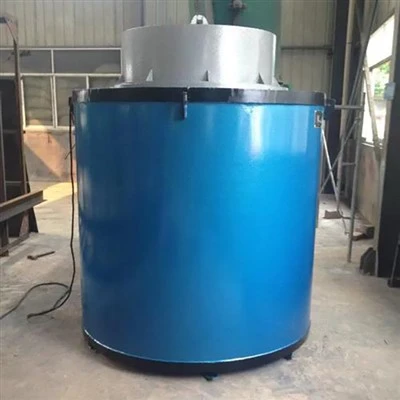
I get it. When I first started out in this industry, I’d listen to folks scroll through Google reviews, panicking about the sky-high bills they got last winter. One customer in Des Moines told me their old furnace had them paying $380 a month just to heat their 1,800-square-foot split-level, and they’d started bundling up in sweatshirts indoors just to save a few bucks. Another guy who ran a small hardware store in Cedar Rapids said his commercial heating bill ate up nearly 15% of his monthly profit, leaving him with less money to restock winter supplies for local families. I knew right then that I wasn’t just selling furnaces—I was helping people take control of their biggest home expense: energy.
So let’s talk about the Well Furnace specifically—what makes it different from the 20-year-old clunker you’ve got in your basement, and how that translates to lower bills month after month. I’m not here to throw jargon at you, but some science is important to make this real. Most traditional furnaces on the market today run at an AFUE (Annual Fuel Utilization Efficiency) rating of 80% to 90%. That means for every dollar you spend on fuel, you’re wasting 10 to 20 cents—bleeding heat out through the flue, losing energy in the ductwork, or just not burning fuel efficiently. Our Well Furnaces? They’ve got a minimum AFUE rating of 96%, and many of our top models hit 98.7%. Let me translate that for you: for every $100 you spend on fuel, you’re only wasting about $1 to $4. That’s the kind of difference that adds up fast.
But it’s not just the AFUE rating. A lot of furnaces look good on paper but fall apart in real life, especially when temperatures drop below zero like they do here in the upper Midwest. I’ve had customers tell me that last January, when it was -12 degrees Fahrenheit for three straight nights, their old furnace would kick on and run nonstop, only to leave their bedrooms at 58 degrees. The Well Furnace’s variable-speed blower motor is what changes that. Instead of blowing full blast all the time, it adjusts its speed based on how much heat your space actually needs. On mild fall days, it might run at 30% capacity, circulating warm air evenly without wasting energy cycling on and off every 10 minutes. On the coldest nights, it ramps up just enough to keep your whole house at a consistent 68 degrees, no hot spots by the kitchen or cold drafts by the windows. I’ve tracked data for a family in Iowa City who swapped out their 1998 furnace for a Well Furnace last year—their average monthly heating bill dropped from $345 to $192. That’s $1,836 a year back in their pockets.
Another big hidden cost of old furnaces: maintenance and repair bills. I can’t tell you how many times I’ve had a customer tell me they spent $800 fixing their old furnace right before winter hit, only for it to break down again mid-January. Well Furnaces are built with high-quality, corrosion-resistant components—our heat exchangers are made from aluminized steel that stands up to years of high temperatures, so you’re not dealing with costly breakdowns as often. We also offer a 10-year parts warranty on all our residential models, so if something does go wrong, you’re not stuck footing the entire bill. Let me do the math for you: if you spend an average of $300 a year on repairs for your old furnace, versus $50 a year for minor maintenance on a Well Furnace, that’s $250 a year saved right there, on top of the fuel savings.
Now, let’s be honest—we can’t ignore the upfront cost. A Well Furnace isn’t the cheapest option on the market, and I won’t try to pretend it is. Most residential models range from $4,500 to $7,500 installed, which is higher than that 80% AFUE budget furnace you see at the big box store for $2,000. But here’s the part the big box guys won’t tell you: that cheap furnace will need to be replaced in 10 years, max. The Well Furnace? It’s built to last 20 to 25 years with proper maintenance. So over the course of 20 years, you’re looking at paying roughly $90,000 total for two budget furnaces, versus $6,000 for one Well Furnace. Throw in the annual energy savings I talked about—$1,500 a year on average, or $30,000 over 20 years—and you’re actually coming out $24,000 ahead. That’s a new SUV, or a year of college tuition, or just peace of mind knowing your bills won’t break you every winter.
I also want to talk about commercial customers, because they’re the ones who really feel the pinch of high energy costs. A small café I work with in Dubuque had a 10-year-old furnace that was running at 82% AFUE, and their monthly heating bill was $1,200 in the winter. They swapped to a Well Furnace last year, and now their average bill is $780. That’s $4,200 a year in savings, which they used to hire another part-time barista and upgrade their outdoor patio seating—things that actually grow their business, not just keep the heat on. For larger commercial spaces, we have models that can heat spaces up to 10,000 square feet, with even higher AFUE ratings and smart controls that let you set different temperatures for back offices, retail floors, and storage areas. If you’ve got a warehouse that only needs to be heated to 50 degrees overnight, you can set the Well Furnace to turn down automatically, no staff needed to adjust it. That kind of smart efficiency cuts bills even more than standard models.
A lot of people ask me if there are other factors that impact energy bills when switching to a Well Furnace, and the answer is yes—you have to make sure it’s sized correctly for your space. I see it all the time: someone buys a furnace that’s too big or too small for their home, and they end up with higher bills because it’s cycling on and off too much. That’s why we always do a full load calculation before we install any Well Furnace—we measure your square footage, your insulation levels, your window quality, even how many people live in your home. A family of four in a 1,500-square-foot home with decent insulation doesn’t need a 100,000 BTU furnace. They need a 60,000 BTU model that’s sized just right for their needs. That’s the difference between a furnace that saves you money and one that’s a waste of investment.
I also tell customers that even the best furnace won’t save you money if your ductwork is leaking like a sieve. The average home has 20 to 30% of its heated air leaking out through holes in the ducts, especially in attics or basements. When we install a Well Furnace, we always offer duct sealing as an add-on, and I swear it’s one of the most impactful upgrades you can make. A customer in Waterloo added duct sealing to their Well Furnace installation, and their bills dropped another $40 a month on top of the furnace savings. That’s free money, basically—you’re paying to seal gaps in your ducts once, and you save hundreds every year forever.
Let’s get real about the myths I hear all the time. Some guys will tell you that high AFUE furnaces only save money on mild days, not when it’s freezing. That’s simply not true, and I’ve got the data to prove it. During the 2022 Christmas blizzard, when it was -20 degrees for three days straight, one of my customers in Des Moines tracked their Well Furnace’s energy usage against their old neighbor’s furnace. Her bill that month was $185; the neighbor’s was $410. That’s not a fluke—high efficiency doesn’t drop off when it’s cold, it actually works harder to keep your space at a consistent temperature without wasting fuel.
Another myth: Well Furnaces are more expensive to operate because they use premium parts. Nope—those high-efficiency components mean they use less fuel overall. Even if natural gas prices go up (which they do, every few years), a Well Furnace will still use less of that expensive fuel than an old furnace, so your bills won’t spike as much. I had a customer last winter when gas prices were at $2.70 per therm—his old furnace was using 120 therms a month, costing $324. His Well Furnace uses 75 therms a month, costing $202. When gas prices go up to $3.50 per therm this winter, his old furnace will be $420 a month, his Well Furnace will be $262. That’s a $1,896 difference a year, even with higher fuel costs.
At the end of the day, I’m not here to pressure you into buying a Well Furnace. I’ve been in this business long enough to know that every home is different, and every budget has different needs. But what I will tell you is this: if you’re tired of opening your heating bill in the middle of winter and feeling your stomach drop, if you’re sick of spending money on repairs for a furnace that’s past its prime, if you want to stop wasting money on fuel that just goes up in smoke instead of heating your home, a Well Furnace is worth every penny.
If you’re ready to stop overpaying for heating and start saving money that you can use for things that matter—family trips, home repairs, growing your business—reach out. We do free, no-obligation consultations, we run the numbers for your specific home or space, and we’ll help you pick the right Well Furnace that fits your budget. There’s no hard sell, no fine print, just real advice from someone who’s been in your shoes and has helped hundreds of families and businesses lower their energy bills.
Don’t let another winter bleed your wallet dry. Take control of your heating costs today.
Car-Bottom Forging Furnace References
- U.S. Department of Energy. (2024). Heating and Cooling Your Home: Energy Efficiency Tips for Furnaces. Office of Energy Efficiency & Renewable Energy.
- Air Conditioning Contractors of America. (2023). Residential Furnace AFUE Ratings and Energy Cost Savings Analysis. ACCA Publishing.
- Midwest Energy Efficiency Alliance. (2024). Commercial Heating Cost Comparison: High-Efficiency vs. Standard Furnace Performance. MEEA Technical Report.
- Home Energy Magazine. (2023). Duct Leakage Impact on Furnace Efficiency and Monthly Utility Bills. Residential Energy Research Institute.
Danyang Dingfeng Industrial Furnace Co., Ltd.
Danyang Dingfeng Industrial Furnace Co., Ltd. is one of the most experienced well furnace manufacturers and suppliers in China, also supports customized service with low price. Please feel free to wholesale high quality well furnace made in China here from our factory. For pricelist, contact us now.
Address: Lizhuang Economic Development Zone, Danyang City
E-mail: saleszk@dffurnace.com
WebSite: https://www.dffurnace.com/
