As a seasoned supplier of globe valves, I’ve witnessed firsthand the pivotal role these components play in various industrial applications. One of the most common questions I encounter from clients is about the piping connection types of globe valves. In this blog, I’ll share my insights on the different piping connection types of globe valves, their advantages, disadvantages, and typical applications. Globe Valve
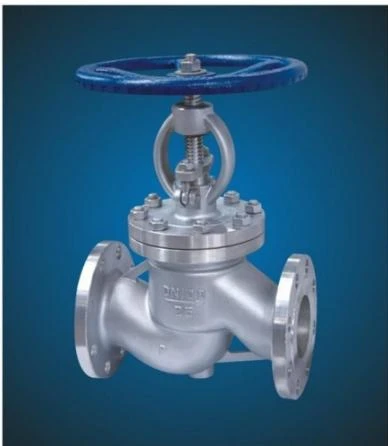
Flanged Connections
Flanged connections are perhaps the most widely used piping connection type for globe valves. They involve bolting the valve between two flanges on the pipes. This connection method offers several key benefits.
First, flanged connections provide a very secure and leak – tight joint. The large contact area between the flanges and the use of gaskets ensure that the valve is firmly attached to the piping system, minimizing the risk of leaks. This is especially crucial in applications where leakage can lead to safety hazards, such as in chemical plants or oil and gas pipelines.
Second, installation and maintenance are relatively straightforward. Flanged valves can be easily removed and reinstalled without cutting the pipes. This makes it convenient for valve replacement, maintenance checks, or system upgrades.
However, flanged connections also have some drawbacks. They are more expensive compared to other connection types. The cost of the flanges, bolts, and gaskets, along with the labor required for installation, can add up. Additionally, they require more space due to the large size of the flanges.
Flanged globe valves are commonly used in high – pressure and high – temperature applications. For example, in power generation plants, where steam at high pressure and temperature needs to be controlled, flanged globe valves are a reliable choice. They are also prevalent in large – scale industrial processes where the need for a secure and easily maintainable connection is paramount.
Threaded Connections
Threaded connections are another popular option for globe valves. In this type of connection, the valve has male or female threads that are screwed into corresponding threads on the pipes.
One of the main advantages of threaded connections is their simplicity and ease of installation. They can be quickly assembled without the need for complex tools or welding equipment. This makes them a cost – effective solution for small – scale applications.
Threaded connections are also quite flexible. They can be easily disassembled, which is useful for valve replacement or system modification. Furthermore, they are suitable for low – to medium – pressure applications.
However, threaded connections have limitations. They are not as reliable as flanged connections in high – pressure or high – temperature environments. The threads can loosen over time due to vibration or thermal expansion, leading to leaks. Also, the size of threaded globe valves is generally limited to smaller diameters, as larger threaded connections can be difficult to assemble and may not provide a secure seal.
Threaded globe valves are commonly found in residential and commercial plumbing systems, where the pressures are relatively low. They are also used in some light – industrial applications, such as in small – scale water treatment plants or laboratory equipment.
Welded Connections
Welded connections involve permanently joining the globe valve to the pipes using welding techniques. This connection method offers a high level of integrity and strength.
The main advantage of welded connections is their excellent leak – tightness. Since the valve and the pipes are fused together, there are no gaps or joints where leaks can occur. This makes them ideal for applications where leakage cannot be tolerated, such as in cryogenic systems or high – purity fluid handling.
Welded connections also provide a very strong and stable joint. They can withstand high pressures and temperatures without the risk of the valve becoming detached from the pipes. Additionally, they require less space compared to flanged connections, which is beneficial in applications where space is limited.
However, welded connections have some significant drawbacks. Installation is more complex and requires skilled welders. Once the valve is welded in place, it is difficult to remove or replace without cutting the pipes, which can be time – consuming and costly. Also, any welding defects can compromise the integrity of the connection.
Welded globe valves are commonly used in industries such as the petrochemical industry, where the transportation of hazardous fluids at high pressures and temperatures is common. They are also used in some power generation applications, especially in systems where the need for a leak – proof connection is critical.
Socket Weld Connections
Socket weld connections are a variation of welded connections. In this type, the end of the pipe is inserted into a socket in the valve body and then welded around the circumference.
Socket weld connections offer a good balance between strength and ease of installation. They are relatively easy to assemble compared to full – penetration welded connections. The socket design provides some alignment assistance during installation, which can reduce the chances of misalignment.
Like other welded connections, socket weld connections are leak – tight and can withstand high pressures. They are also more compact than flanged connections, making them suitable for applications where space is a concern.
However, socket weld connections can be prone to crevice corrosion at the socket – pipe interface. Also, inspection of the weld can be more difficult compared to other connection types.
Socket weld globe valves are often used in small – to medium – sized piping systems in industrial applications, such as in refineries or chemical processing plants.
Butt Weld Connections
Butt weld connections involve welding the ends of the valve and the pipes together in a butt – joint configuration. This type of connection provides a very strong and continuous flow path.
Butt weld connections are known for their high – quality and reliability. They are capable of withstanding high pressures and temperatures, making them suitable for demanding applications. The smooth interior surface of the butt – welded joint minimizes flow resistance, which is beneficial in systems where efficient fluid flow is required.
However, butt weld connections require precise alignment and skilled welding. The installation process is more time – consuming and expensive compared to some other connection types. Any misalignment during welding can lead to weak points in the joint.
Butt weld globe valves are commonly used in high – pressure and high – temperature pipelines, such as in power plants and offshore oil and gas platforms.
Conclusion

Selecting the right piping connection type for a globe valve is crucial for the efficient and safe operation of the piping system. Each connection type has its own set of advantages and disadvantages, and the choice depends on various factors such as pressure, temperature, fluid type, installation requirements, and cost.
Globe Valve As a globe valve supplier, I understand that every client’s needs are unique. Whether you’re managing a large – scale industrial project or a small – scale plumbing system, I can provide you with the right globe valve and the appropriate piping connection type. If you’re in the process of planning a new project or upgrading your existing system and have questions about globe valve piping connections, I’d be more than happy to assist you. Feel free to reach out to me to start a procurement discussion. I’m here to offer you the best solutions based on my years of experience in the industry.
References
- ASME B16.34 – Valves – Flanged, Threaded, and Welding End.
- API 602 – Compact Steel Gate, Globe, and Check Valves.
- Manufacturer’s Installation and Operation Manuals for Globe Valves.
Zhengmao Valve Co., Ltd.
As one of the most professional globe valve manufacturers and suppliers in China, we have world-leading production equipment and strong manufacturing capabilities. Please feel free to wholesale advanced globe valve at competitive price from our factory.
Address: No. 19, Zhangbao West Road, Wuxing Industrial Zone, Oubei Town, Yongjia County
E-mail: chinazmv@Gmail.com
WebSite: https://www.zhengmao-group.com/
