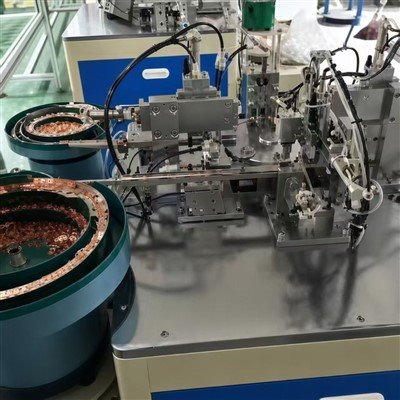
Maintaining a rear testing production line is a critical aspect of ensuring the smooth operation and high – quality output of any manufacturing process. As a rear testing production line supplier, I have witnessed firsthand the importance of proper maintenance in enhancing productivity, reducing downtime, and improving product quality. In this blog, I’ll share some key strategies and best practices for maintaining a rear testing production line. Rear Testing Production Line
Regular Inspections
Regular inspections are the cornerstone of an effective maintenance regime for rear testing production lines. These inspections should be conducted at different intervals, from daily visual checks to comprehensive monthly or quarterly evaluations.
Daily Checks
On a daily basis, operators should perform quick visual inspections of the production line. This includes looking for any signs of leakage, loose components, or abnormal noises. For example, in the hydraulic systems often found in testing equipment, a small leak can quickly escalate into a major problem, so spotting it early is crucial. Operators should also check the power supply and connections to ensure that all the testing devices are receiving proper electrical input.
Periodic Comprehensive Inspections
Monthly or quarterly, more in – depth inspections should be carried out. This involves disassembling some parts of the production line, if necessary, to check for wear and tear. Components such as conveyor belts, test sensors, and mechanical arms need to be examined closely. The conveyor belts may show signs of fraying or misalignment, which can lead to product jams or inaccurate testing positioning. Test sensors, which are responsible for collecting critical data about the products being tested, can degrade over time, resulting in unreliable test results.
Cleaning and Lubrication
Cleaning and lubrication are essential for keeping the rear testing production line in good working condition.
Cleaning
The production line environment can be filled with dust, debris, and product residues. Over time, these can accumulate on the equipment, affecting its performance. For example, dust on the optical sensors used in some testing procedures can interfere with the light detection and cause false readings. Regular cleaning of the entire production line, including the testing stations, conveyor belts, and storage areas, is necessary. Special cleaning agents should be used as per the equipment manufacturer’s recommendations to avoid damaging sensitive components.
Lubrication
Moving parts in the production line, such as the joints of mechanical arms and the bearings of conveyor rollers, require proper lubrication. Lubrication reduces friction, which in turn reduces wear and tear and extends the lifespan of the components. The type of lubricant used should be carefully selected based on the operating conditions, such as temperature and load. For high – temperature areas, a heat – resistant lubricant is required, while in areas exposed to moisture, a water – resistant lubricant is more appropriate.
Calibration of Testing Equipment
Accurate testing results are the main objective of the rear testing production line. To achieve this, regular calibration of the testing equipment is vital.
Frequency of Calibration
Testing equipment should be calibrated at specific intervals defined by the manufacturer or industry standards. For example, electrical testing units may need to be calibrated every six months, while more sensitive pressure testing devices may require calibration on a quarterly basis. Calibration ensures that the testing equipment provides accurate and consistent results.
Calibration Process
Calibration involves comparing the readings of the testing equipment against a known standard. Any deviations are then adjusted to bring the equipment back to its normal operating accuracy. This process usually requires the use of specialized calibration tools and trained technicians. For example, when calibrating a torque wrench used in the testing of certain components, a calibrated torque standard device is used to check and adjust the wrench’s output.
Staff Training
Well – trained staff are essential for the proper maintenance of the rear testing production line.
Initial Training
When new employees are hired, they should receive comprehensive training on the operation and basic maintenance of the production line. This includes understanding the function of each component, how to perform daily inspections, and basic cleaning and lubrication procedures. Training can be provided through a combination of in – house training sessions, on – the – job training, and external courses.
Continuous Training
As the production line technology evolves and new equipment is introduced, continuous training is necessary. Employees need to be updated on the latest maintenance techniques, safety procedures, and troubleshooting methods. This can be achieved through regular training seminars, workshops, and online courses.
Troubleshooting and Problem – Solving
Even with regular maintenance, problems can still occur on the rear testing production line. Having a well – defined troubleshooting process is crucial for minimizing downtime.
Problem Identification
When a problem occurs, the first step is to accurately identify the issue. This may involve examining the equipment, checking the test data, and interviewing the operators. For example, if the test results are inconsistent, it could be due to a faulty sensor, a problem with the data acquisition system, or an issue with the test parameters.
Root – Cause Analysis
Once the problem is identified, a root – cause analysis should be conducted. This involves looking beyond the surface symptoms to find the underlying cause of the problem. For instance, if a conveyor belt is slipping, the root cause could be due to a worn – out belt, improper tensioning, or a problem with the drive motor. By identifying the root cause, a more effective solution can be implemented.
Solution Implementation
Based on the root – cause analysis, a solution should be developed and implemented. This may involve replacing a faulty component, adjusting the settings of the equipment, or modifying the production process. After the solution is implemented, it should be tested to ensure that the problem has been resolved.
Spare Parts Management
Maintaining an adequate inventory of spare parts is crucial for minimizing downtime in case of component failures.
Critical Spare Parts Identification
Identify the critical spare parts that are most likely to fail and have a significant impact on the production line. These may include common wear – and – tear components such as belts, sensors, and fuses. Having a list of critical spare parts helps in planning the inventory management.
Stock Level Management
Determine the appropriate stock levels for each spare part. This should be based on the average failure rate of the components, the lead time for procurement, and the production schedule. For example, if a particular sensor has a high failure rate and a long lead time for procurement, a higher stock level should be maintained.
Documentation and Record – Keeping
Proper documentation and record – keeping are essential for effective maintenance of the rear testing production line.
Maintenance Logs
Maintain detailed maintenance logs that record all the inspections, cleaning, lubrication, calibration, and repair activities. These logs provide a historical record of the production line’s maintenance history, which can be used for future reference, troubleshooting, and performance evaluation. For example, if a component fails repeatedly, the maintenance logs can help in identifying the pattern and taking preventive measures.
Equipment Manuals and Specifications
Keep all the equipment manuals and specifications readily available. These documents contain valuable information about the equipment’s operation, maintenance requirements, and technical specifications. They are essential for technicians when performing maintenance and repairs.
In conclusion, maintaining a rear testing production line requires a comprehensive approach that includes regular inspections, cleaning, lubrication, calibration, staff training, troubleshooting, spare parts management, and documentation. By following these best practices, manufacturers can ensure the reliable operation of their rear testing production line, improve product quality, and reduce production costs.
If you are interested in learning more about our rear testing production lines or our maintenance services, we invite you to contact our sales team for a detailed discussion. We are committed to providing high – quality equipment and excellent after – sales support to meet your production needs.
Ball Screw Linear Modules References
- "Manufacturing Automation: Principles and Applications" by Michael P. Groover
- "Maintenance Engineering Handbook" by Robert B. Panda and Pradip Kumar Ray
- Industry – specific technical bulletins from leading equipment manufacturers
Yangning (Xiamen) Intelligent Technology Co., Ltd.
With abundant experience, we are one of the most professional rear testing production line manufacturers in China. As we have world-leading production equipment and strong manufacturing capabilities, we warmly welcome you to buy bulk advanced rear testing production line from our factory. Customized orders are welcome.
Address: Room 307-2, No. 15 Duiying Road, Software Park Phase III, Torch Hi-Tech Zone, Xiamen, Fujian, China
E-mail: mia@ynautos.com
WebSite: https://www.ynautos.com/
