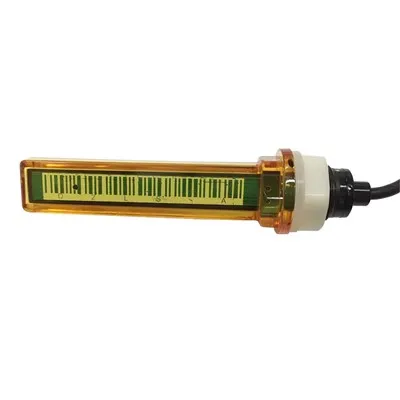
Optical level sensors are pretty nifty gadgets, especially when it comes to transparent containers. As a supplier of these sensors, I’ve seen firsthand how they work and how they benefit different industries. Let’s dive into the nitty – gritty of how optical level sensors operate in transparent containers. Optical Level Sensor
Basic Principle of Optical Level Sensors
First off, let’s talk about the basic working principle. Optical level sensors rely on the behavior of light. They usually have an emitter and a detector. The emitter sends out light, typically infrared light, and the detector is there to receive that light.
When it comes to transparent containers, the way light travels inside and outside the container is key. In a situation where there’s no liquid in the area of the sensor in the container, the light follows a certain path. The light from the emitter goes through the transparent container wall and then reflects back to the detector due to the difference in the refractive index between the container wall and the air outside.
The refractive index is a measure of how much a light ray bends when it moves from one medium to another. Air has a refractive index of about 1.0003, while common materials used for transparent containers like glass have a refractive index around 1.5. This difference in refractive index causes the light to bounce back to the detector, and the sensor interprets this as an "empty" or "no – liquid" state.
When Liquid Enters the Picture
Now, when liquid fills up the container and reaches the level of the sensor, things change. The liquid has its own refractive index. For example, water has a refractive index of about 1.33. When the liquid comes in contact with the container wall at the sensor location, the light from the emitter refracts differently.
The light is no longer reflected back to the detector in the same way as it was when there was only air. Instead, the light is refracted into the liquid because the refractive index of the liquid is closer to that of the container wall compared to air. This change in the light path means that the detector receives less light or no light at all. The sensor then detects this decrease in the received light and interprets it as the presence of liquid at that level.
Types of Optical Level Sensors for Transparent Containers
There are a few different types of optical level sensors that work well in transparent containers.
One type is the through – beam sensor. In this setup, the emitter and the detector are placed on opposite sides of the transparent container. When there’s no liquid between them, the light from the emitter travels straight through the container and is detected by the detector. But when liquid fills the space between the emitter and the detector, the liquid scatters and absorbs some of the light, causing a decrease in the light intensity received by the detector. The sensor can then tell that the liquid has reached the level between the emitter and detector.
Another type is the reflective optical level sensor. This is the one I mentioned earlier where the emitter and detector are on the same side of the container. It’s really handy because it doesn’t require access to both sides of the container. It’s based on the change in the reflection of light due to the presence or absence of liquid at the sensor location.
Advantages in Transparent Containers
Optical level sensors offer several advantages when used in transparent containers.
For starters, they are non – intrusive. You don’t have to drill holes in the container or insert any probes into the liquid. This is great because it keeps the container sealed, preventing any leakage of the liquid. It also means that there’s less chance of contamination, which is crucial in industries like food and beverage, pharmaceuticals, and chemicals.
They are also highly accurate. Since they rely on the precise behavior of light, they can detect even small changes in the liquid level. This accuracy is important in applications where you need to know exactly how much liquid is in the container, such as in laboratory settings or in industrial processes where precise dosing is required.
Optical level sensors are also very fast. They can detect changes in the liquid level almost instantaneously. This is useful in applications where you need to react quickly to changes in the liquid level, like in automated filling systems. If the liquid level reaches a certain point, the sensor can send a signal to stop the filling process right away.
Applications in Different Industries
In the food and beverage industry, optical level sensors are used in transparent storage tanks. For example, in a winery, they can be used to monitor the level of wine in clear glass or plastic tanks. This helps in inventory management and ensures that the tanks don’t overflow during the filling process.
In the pharmaceutical industry, they are used in transparent vials and containers. They can detect the exact level of liquid medicine in a vial, which is essential for accurate dosing. This is especially important for drugs that have a narrow therapeutic range.
In the electronics industry, optical level sensors are used to monitor the level of cleaning solvents in transparent tanks. This helps in ensuring that the cleaning process is consistent and that the tanks are refilled at the right time.
Installation and Maintenance
Installing optical level sensors in transparent containers is usually pretty straightforward. For the reflective sensors, you simply mount them on the outside of the container at the desired level. Make sure that the surface of the container where you’re mounting the sensor is clean and free of any scratches or dirt, as this can affect the light transmission.
For through – beam sensors, you need to align the emitter and the detector on opposite sides of the container carefully. You can use alignment tools to make sure that the light from the emitter hits the detector accurately.
Maintenance is also relatively easy. You just need to keep the sensor clean. Wipe the sensor periodically to remove any dust or residue that might accumulate on it. Check the connections to make sure that they are secure and that there are no loose wires.
Conclusion
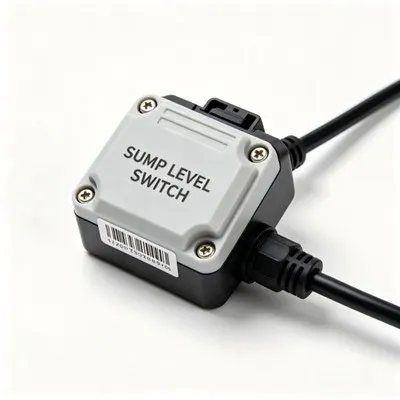
Optical level sensors are a great solution for monitoring liquid levels in transparent containers. Their non – intrusive nature, high accuracy, and fast response make them suitable for a wide range of industries. Whether you’re in the food and beverage, pharmaceutical, or electronics industry, these sensors can help you manage your liquid levels more effectively.
Optical Level Sensor If you’re looking for a reliable optical level sensor for your transparent containers, I’d love to talk to you. We’ve got a wide range of sensors to suit different needs and applications. Reach out to us to discuss your specific requirements and let’s find the perfect solution together.
References
- "Optical Sensors: Principles, Design, and Applications" by Wolfgang Gopel, James H. Wohltjen
- "Liquid Level Measurement Handbook" by David W. Spitzer
Shenzhen Fineherc Technology Co., Ltd.
As one of the most experienced optical level sensor suppliers in China, we’re featured by quality products and low price. Please feel free to buy discount optical level sensor made in China here from our factory. Welcome to view our website for more information.
Address: 5th Floor, Building D, No. 39, Keji East Road, Torch Development Zone, Zhongshan City,China
E-mail: fineherc@hotmail.com
WebSite: https://www.fineherc.com/
