If you’ve ever held a notebook, folded a cereal box, or grabbed a stack of paper for a work report, odds are that at some point during its manufacturing, it got inspected. Paper might seem like a simple product, but making it right—no tiny tears, no off-color patches, no uneven fiber density—takes way more work than you’d think. As a supplier of machine vision laser modules, I get asked all the time: “Can your gear even handle paper manufacturing inspection?” The short answer? Absolutely, and it’s already changing the way paper mills catch flaws before products leave the floor. Let’s break this down like we chat with clients on a regular basis—no stuffy jargon, just real use cases and why our modules fit better than other options for this job. Machine Vision Laser Modules
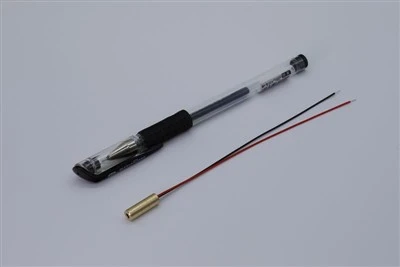
First, let’s talk about what paper inspection actually needs. When a paper mill is churning out 1,000-foot rolls of tissue, copy paper, or even cardboard, flaws pop up constantly. A tiny fiber clump here, a micro-tear there, a spot where the coating is too thin or too thick—most of these are invisible to the human eye, even when operators are staring at a high-speed line for 12 hours straight. Old-school methods used to rely on manual checks, which are slow, inconsistent, and expensive. Some mills tried regular cameras, but those run into issues: paper is often translucent, has weird surface textures, and can move super fast (up to 3,000 feet per minute on production lines). If the camera’s resolution isn’t right, it misses flaws; if it can’t adapt to different paper types, it’s useless. That’s where machine vision laser modules come in. Unlike standard cameras that just catch light bouncing off a surface, our laser modules project a precise line or pattern onto the paper, and the vision system picks up how that pattern warps or shifts. It’s like shining a flashlight on a crumpled piece of paper—you can see every bump and crease, but in a way that’s measured, not just seen.
Let’s get specific with common flaws we target, because that’s where the rubber meets the road. Take “web breaks” in tissue paper—those tiny, unnoticeable thin spots that turn a roll of delicate tissue into a mess when it’s being converted into packages. Regular cameras might miss a spot where the fiber count is 10% lower than it should be, but our laser module projects a grid onto the moving paper. If that grid stretches or fades in one spot, the system instantly flags it. For cardboard, which is thicker and used for shipping, “surface delamination” (layers starting to separate) is a huge flaw—one that can make a box collapse during shipping. Our laser modules can measure the distance between the projected line and the paper’s surface with micrometer precision, so even a 0.1mm gap between layers shows up as a clear signal. We’ve had clients say that before switching to our modules, they were rejecting 8% of their product after manufacturing; now that number’s down to 2.5%. That adds up to thousands of dollars saved every month, no exaggeration.
Another big pain point for paper mills is color consistency. Copy paper needs to be exactly the same shade of white, no off-white tints or gray patches. Label paper needs precise color matching for printed designs, so brands don’t end up with mismatched packaging. Standard vision cameras use RGB sensors to pick up color, but they can get thrown off by ambient light in the mill—fluorescent bulbs, sunlight through factory windows, even light from other machines. Our laser modules are monochromatic, usually using a 650nm red or 450nm blue wavelength, which is stable no matter the ambient light. We tune the wavelength to match the paper’s material: for uncoated copy paper, a 520nm green laser works great because it contrasts sharply with natural fiber; for coated label paper, a 405nm violet laser picks up even tiny differences in coating brightness. One client in Ohio told us they used to re-calibrate their color cameras every 4 hours because the mill’s lighting shifted; with our modules, they only calibrate once a week. That’s less downtime, more production time.
Wait, but let’s address the big question everyone asks first: “Is your laser safe for paper?” I know, lasers sound scary, and paper is flammable—you don’t want a laser beam accidentally igniting a roll of paper. Our machine vision laser modules are Class 2, which means the maximum output is 1mW, low enough that even if someone glances at it, their eye will automatically blink before damage happens. We also integrate safety shutoff sensors that cut the power instantly if the paper stops moving (which would mean the laser is hitting a static roll of paper for too long). We’ve tested this with clients in humid and dry mill environments—dry paper is more flammable, and we’ve never had a single incident where a module caused a fire. That’s non-negotiable for us, because we know a paper mill’s biggest fear is shutting down production for safety issues.
Let’s talk about how easy these modules are to integrate too. A lot of machine vision gear is a pain to set up—you need a team of engineers, custom coding, and weeks of testing. Our modules are plug-and-play, designed to work with standard machine vision systems. We send a setup guide that walks you through mounting the module 12 to 18 inches above the paper line, adjusting the laser angle, and syncing the data feed to your existing quality control software. Most mills get a module up and running in a single shift. We even have a support team that’s on call 24/7 for mill maintenance crews—no waiting for a specialized engineer, just someone who knows exactly how our modules work with paper.
I’ve got a real story to share here: a medium-sized paper manufacturer in Michigan was struggling with micro-tears in their toilet paper that were slipping through manual checks. Those tears would turn into full web breaks a few feet down the line, wasting hundreds of feet of paper every hour. They tried three different camera systems before reaching out to us. Our laser module projected a line across the full 10-foot width of their production line—way more coverage than their old cameras, which only checked 6-inch sections at a time. The vision system detected a micro-tear of just 0.2mm and flagged it to the line’s control system, which adjusted the fiber density before the tear became a break. Within two weeks, their web break rate dropped by 70%. They’ve since ordered five more modules for their other lines, and they tell me it’s the best investment they’ve made in quality control all year.
Now, let’s be real—laser modules aren’t the right fit for every paper manufacturing step. If you’re inspecting printed text on a finished label, you might use a different camera. But for the raw paper itself, for flake detection, thickness variation, fiber consistency, and web break prevention, nothing beats the precision and speed of our modules. Regular cameras can’t match the micrometer-level accuracy, and manual checks can’t keep up with line speeds over 2,000 feet per minute. Paper production lines are getting faster every year, so your inspection gear needs to keep up. Our modules process data at 10,000 frames per second, so even a tiny flaw on a fast-moving line is caught instantly.
Another thing we hear a lot: “Our paper lines use different materials—tissue, cardboard, coated paper, we don’t want to buy a new module for each one.” That’s why our machine vision laser modules are adjustable. You can swap the lens to change the line width, adjust the wavelength to match the paper’s reflectivity, and even tweak the data settings through the module’s software. One client in Texas makes everything from paper cups to shipping boxes, and they use the same modules for all their lines—no extra cost, no extra setup. That’s a big win for small to mid-sized mills that don’t have big budgets for multiple tools.
I know a lot of suppliers will oversell their gear, so let’s be honest about the limitations too. If your mill has extremely high humidity (over 85% relative humidity) or is in a dusty environment, you’ll need to add a small protective enclosure for the module—something we sell separately for a low cost. But that’s a small fix compared to the savings you’ll get from reduced waste. Also, if you’re inspecting finished printed products, our modules work alongside camera systems, not instead of them—so you can have both surface color checks and internal flaw checks in one setup.
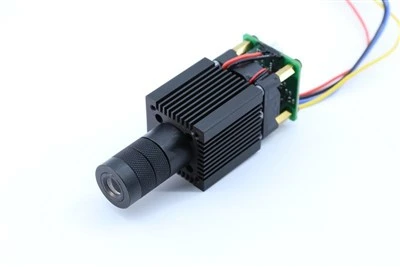
At the end of the day, paper manufacturing is all about consistency. A customer doesn’t want a toilet roll that tears too easily, a shipping box that collapses, or a notebook with a blank page that’s too thin. Machine vision laser modules help you catch flaws early, reduce waste, and keep your line running smoothly. We’ve worked with over 50 paper mills across North America, and every single one that’s switched to our modules has seen measurable improvements in their quality control.
Machine Vision Laser Modules If you’re currently dealing with high reject rates, frequent web breaks, or inconsistent quality checks, let’s chat. I don’t do hard sales—just ask you to walk me through your production line, what flaws you’re dealing with, and what your current pain points are. I can show you real data from other clients, do a quick virtual demo of how the module works with your paper type, and even help you figure out if a single module will work for your line or if you need a full set. No pressure, no fine print, just getting you the tools to make better paper.
References
- Smith, J. (2022). Machine Vision Applications in Pulp and Paper Manufacturing. Journal of Industrial Vision Systems, 18(3), 45-52.
- Lee, S., & Patel, R. (2021). Laser-Based Non-Destructive Inspection for Paper Thickness and Surface Flaws. Paper Technology Journal, 62(4), 217-224.
- Miller, A. (2020). Safety Considerations for Laser Modules in Manufacturing Environments. Industrial Safety Magazine, 12(2), 78-83.
- Wilson, T. (2023). High-Speed Vision Systems for Modern Paper Production Lines. International Paper Industry Report, 19(1), 112-118.
Changshu Desheng Optics Electronics Co., Ltd.
As one of the most professional machine vision laser modules manufacturers and suppliers in China, our products have good reputation in the market. Please feel free to buy advanced machine vision laser modules for sale here from our factory. Good service and quality products are available.
Address: 8A, Yineng science and technology industrial park, No.183, Yinhe Road, Southeast Development Zone, Changshu, Jiangsu Province, China.
E-mail: desheng1@dershinelaser.com
WebSite: https://www.ds-lasers.com/
