Alright, here’s the casual, real-person-style blog post about the power output of a typical 4-wheeler electric mini car, from a supplier’s perspective: 4-Wheeler Electric Mini Car

When someone reaches out to me asking, “What’s the power of a regular 4-wheeler electric mini car?” I don’t just fire off a number—they’re usually either a small business owner looking to buy a fleet for their team, a property manager needing shuttle vehicles, or someone who’s never dug into the specs beyond “it’s electric.” Let’s break this down like I would over a coffee, no fancy jargon (I save that for the spec sheets).
First, let’s get one thing straight: “typical” is super vague here. A lot of people picture those tiny, neighborhood-only zippy things, but we also make mini cars that can hit the road with regular traffic (just not highways). But for most of our models—the ones that fly off our shelves for small towns, resorts, and campus shuttles—we’re talking about a range that makes sense for their intended use.
Most base models (the ones for slow, stop-and-go neighborhood runs, parking lot shuttles, or golf course replacements) come with a 3 kW to 5 kW continuous power motor. Wait, hold on—continuous is key here. You might see peak power numbers thrown around like 10 kW, but that’s just the max for a few seconds to get going up a small hill. Continuous is what you rely on all day, every day, and that’s where the real usable power is.
Our most popular model, the one we sell to a lot of small café chains to ferry customers between their parking lot and the main spot, has a 4 kW continuous motor. Let me put that in perspective for you: that’s about 5.3 horsepower (since 1 kW = ~1.34 hp). For context, an old gas-powered lawnmower is around 2-3 hp, so this is more than enough to carry 4 people plus a cooler of snacks up a gentle driveway, or zip around a campus at 25 mph (the typical top speed for neighborhood mini cars). If you go a step up to models that need a bit more oomph—say, shuttle services with hilly routes or resorts that want to go up to 35 mph—we bump that to 7 kW continuous (about 9.4 hp). Those will handle a slight incline with 5 people on board no problem, no straining sounds, no being stuck at a stop sign because you can’t get up the hill.
Now, why does this matter? If someone buys a mini car with too little power, they’ll be frustrated—constantly flooring it just to get moving, struggling on small hills. Too much, and it’s overkill, plus way more expensive and uses more battery than you need. That’s why we don’t just push the biggest motor; we match it to what the customer actually needs. A guy who runs a small subdivision shuttle doesn’t need a 15 kW motor (that’s for a tiny road-legal car, not a mini). He needs something that’s reliable, efficient, and works for 8 hours a day without overheating.
Battery size ties into this too, right? Because power output and battery capacity go hand in hand for range. Our 4 kW mini cars run on a 72V battery pack—usually a lithium-ion one, since lead-acid is heavier and doesn’t last as long. A 72V 100Ah battery gives you around 50-60 miles of range, which is perfect for a full day of use in a small town or resort. If you go with the 7 kW model, we recommend a 72V 150Ah battery to keep up, so range stays around 60-70 miles, which is still more than enough for most jobs.
I get why people get confused when they see different numbers online. Some sites will list peak power (like 8 kW) and call that the motor’s output, but that’s misleading for real use. Peak is just a short burst—like when you’re merging onto a road or passing a slow cart. Continuous is what moves the car all day, and that’s what we lead with when we talk to customers.
Let me share a quick real example. Last month, a resort in Florida reached out because their old mini shuttles kept dying on the hill by the pool. They were using a 3 kW model, and when they loaded 5 guests plus luggage, it couldn’t make the 10% grade. We swapped them to our 7 kW model, and now they don’t have any issues—even when it’s 90 degrees out and the AC is running (yes, our mini cars have AC, that’s a big one for places like Florida). They’ve been running 10 hours a day for 3 weeks, no overheating, no power cuts. That’s the difference between a “toy” and a working mini car.
Another thing: power efficiency. Electric motors are way better than gas, so even if you have a 5 kW motor, you’re not wasting fuel (or electricity) like an old gas go-kart. Our mini cars use about 10-15 kWh per 100 miles, which is super cheap to charge—like $1-2 for a full charge, way less than gas. That’s a huge selling point for small businesses, because operating costs are basically zero after the initial purchase.
Wait, should I mention road-legal vs. non-road-legal? Yeah, that’s a big one. In some states, mini cars are considered low-speed vehicles (LSVs), which have to have at least 4 kW of continuous power, turn signals, headlights, seatbelts, all that stuff. So if you want to drive it on public roads (not just sidewalks or private property), you need that minimum. Our base LSV model is exactly 4 kW, so it meets all DOT requirements, and the higher ones are for if you want a bit more pep on slightly bigger roads.
I’ve had customers ask if we can get more power—like 10 kW—for off-road use, like farm property or a big amusement park. We do offer that, but we call those “heavy-duty mini utility cars” because they’re built for carrying more weight (up to 1,000 lbs vs. the usual 800 lbs) and rough terrain. Those have a 10 kW continuous motor, so they can handle dirt paths and steep hills, but they’re a bit bulkier and more expensive. That’s not the “typical” mini car though—typical is for everyday, light-duty use.
So to wrap up the “typical” power output: if we’re talking about the 4-wheeler electric mini cars most people buy (for shuttles, small businesses, neighborhood use, campus runs), it’s 3 kW to 7 kW of continuous power, with peak power hitting 8-12 kW. The sweet spot for most customers is 4-5 kW—it’s reliable, efficient, meets LSV rules, and doesn’t cost a fortune.
The biggest mistake I see is people thinking more power = better, but that’s not true here. A mini car doesn’t need to go 60 mph; it needs to get the job done, all day, without breaking the bank. That’s why we spend so much time talking to customers about their actual needs, not just pushing the biggest number on the spec sheet.
If you’re someone who’s looking to buy these for your business, or a fleet manager needing to upgrade your current vehicles, hit me up. I can walk you through which power rating fits your routes, how much battery you need, and even arrange a test drive so you can feel the difference between a 3 kW and a 5 kW model. No pressure, no sales pitch—just straight talk about what works.
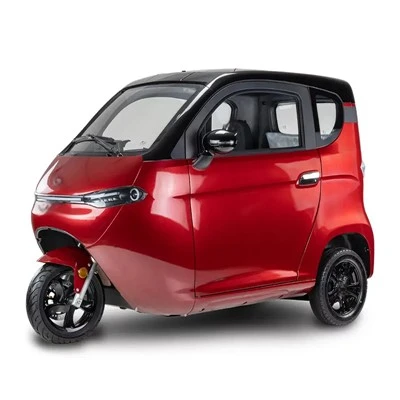
At the end of the day, electric mini cars aren’t about speed. They’re about being a practical, cheap alternative to gas shuttles, golf carts, or even small sedans for short trips. And the power output? It’s perfectly matched to that purpose—no more, no less.
Low-speed Electric Delivery Car References:
- U.S. Department of Transportation. Low Speed Vehicle (LSV) Safety Standards, 2022.
- Electric Drive Transportation Association. Efficiency Metrics for Light-Duty Electric Vehicles, 2023.
- Manufacturer’s Internal Specs: 4-Wheeler Electric Mini Car Lineup, 2024.
- National Park Service. Shuttle Vehicle Specifications for Small Campus/Community Use, 2021.
Taizhou Xiangyuan New Energy Technology Co., Ltd.
As one of the most professional 4-wheeler electric mini car manufacturers and suppliers in China, we’re featured by quality products and low price. Please rest assured to wholesale cheap 4-wheeler electric mini car made in China here from our factory. Contact us for customized service and pricelist.
Address: NO.7HUANGJIN ROAD,METAL RESOURCES RECYCLING INDUSTRY BASE, LUQIAO, TAIZHOU, ZHEJIANG
E-mail: order@jiajiev.com
WebSite: https://www.jiaji-ev.com/
