If you’ve ever had a piece of machinery seize up, a conveyor belt stop mid-shift, or a construction rig lose its lift halfway through a job, there’s a good chance the culprit was a worn pin shaft. As a pin shaft supplier, I talk to dozens of maintenance managers, design engineers, and workshop foremen every week, and the same question comes up again and again: “How do I make these parts last longer?” Pin shafts might seem like simple, straightforward components—just a rod to connect two moving parts, right? But in reality, they bear enormous static and dynamic loads, constant friction, corrosion, and exposure to dust, moisture, and extreme temperatures. The anti-wear measures we share with our customers aren’t just about extending part life; they’re about reducing downtime, cutting replacement costs, and keeping operations running smoothly. Today, I’m breaking down the science-backed anti-wear strategies we recommend, straight from the perspective of someone who ships thousands of pin shafts to sites across the country every month. Pin Shaft
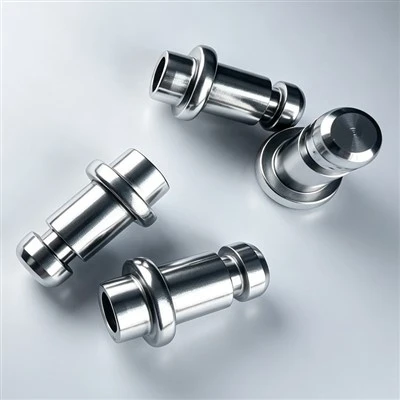
First, let’s start with the foundation: material selection. You can’t build a long-lasting pin shaft out of soft steel—even if you coat it, the base material will wear out before long. Most standard pin shafts are made from carbon steel, but not all carbon steel is created equal. Low-carbon steels, like 1018, are cheap and easy to machine, but they’re soft, scratch easily, and wear down fast under heavy load. That’s why for most high-stress applications, we recommend medium-carbon steels, like 1045 or 4140. 1045 steel has a higher carbon content (around 0.45%), which makes it much stronger and more resistant to surface wear than low-carbon variants. For even more demanding environments—think construction sites where shafts are exposed to rain, dirt, and abrasive materials, or manufacturing lines where parts rub together at high speed—we turn to alloy steels. 4140 steel, for example, adds chromium and molybdenum, which improve tensile strength, impact resistance, and hardenability. This is a game-changer because a shaft made from 4140 can handle 20-30% more load than a 1045 shaft before showing signs of wear. We also work with customers on custom material requests, like through-hardened steel for extreme heavy loads or case-hardened steel for parts that need a tough outer surface and a tough inner core. Case hardening is a key point here: low-carbon steel shafts can be carburized, a process where carbon is diffused into the outer layer, then quenched to create a hard, wear-resistant surface while the core stays ductile enough to resist bending or breaking. That balance is critical—you don’t want a shaft that’s so brittle it snaps when a load shifts, but you also don’t want one that’s soft enough to wear down in a month.
Next up, surface treatment and coatings, which are like a second skin for pin shafts. Even the hardest steel shaft will wear if its surface is exposed to friction and corrosion. There are dozens of coatings out there, but we stick to the ones that are proven to stand up to real-world conditions, not just lab tests. Let’s start with the most common and effective: electroplated zinc and zinc nickel. Zinc plating is a staple for corrosion resistance, and it adds a thin, even layer that protects the steel from rust. For parts in mild environments—like warehouse conveyor systems or indoor packaging equipment—standard zinc plating works well, but it’s not the most wear-resistant option. That’s where zinc nickel comes in: it has 10-15% nickel, making it 2-3 times harder than standard zinc plating, and it resists wear from rubbing parts much better. We also use phosphate coatings for applications where friction is a big concern. Phosphate treatments create a porous, crystalline surface that holds lubricant better than smooth steel, which reduces dry friction. This is especially useful for pin shafts that move in enclosed bearings or bushings, where consistent lubrication is hard to maintain. For customers working in extreme environments—like oil and gas sites where shafts are exposed to harsh chemicals, or agricultural equipment that’s constantly covered in dirt and mud—we recommend hard chrome plating. Hard chrome is a thick, dense coating that’s extremely hard (up to 70 HRC, compared to 20 HRC for standard steel) and resistant to abrasion and corrosion. It does have one downside: it’s more expensive and can be brittle if applied too thick, but for high-load, high-wear applications, it’s worth the investment. We also offer newer options like ceramic coatings and thermal spray coatings for even more specialized uses, but we always work with the customer to pick a coating that fits their specific needs, not just the shiniest one on the market.
Once you’ve got the right material and coating, the next step is machining and finishing, because small imperfections can lead to big wear problems. A pin shaft’s surface finish is measured in roughness average (Ra), and the goal is to keep Ra as low as possible—usually between 0.8 and 1.6 micrometers for most applications. If the surface is rough, tiny peaks will rub against the mating part, creating friction that wears down both the shaft and the bushing or hole it’s connected to. When we machine pin shafts, we use precision grinding and polishing to get that smooth finish. We also make sure the roundness and straightness of the shaft are within tight tolerances—even a 0.1 millimeter bend in a shaft can cause uneven loading, leading to localized wear in one spot. For example, if a shaft is used in a forklift’s lift mechanism, a small bend will make it rub on one side of the bushing every time it lifts, wearing a groove in the shaft in just a few weeks. Another key machining feature is the chamfer or radius on the ends of the shaft. Sharp edges catch on mating parts during installation, and when the shaft moves, those sharp edges can act like knives, cutting into the bushing or the hole, creating extra wear. We add a small radius (usually 0.5 to 1 millimeter) to the ends of every pin shaft we ship, which smooths the transition and reduces that initial friction.
Lubrication is another anti-wear measure that’s often overlooked, but it’s arguably the most important one. Even the hardest, smoothest shaft will wear if it’s running dry. The job of lubrication is to create a barrier between the shaft and the mating part, so they don’t rub directly against each other, and to carry away heat generated by friction. There are two main types of lubrication we recommend for pin shafts: grease and oil. Grease is the most common, because it’s easy to apply and stays in place, even in dirty environments. For most general-purpose applications, we recommend a lithium-based grease with extreme pressure (EP) additives. EP additives, like sulfur or phosphorus compounds, form a protective layer on the metal surfaces under high load, preventing metal-to-metal contact even when the grease film is thin. For applications where shafts are exposed to high temperatures—like industrial furnaces or exhaust systems—we use high-temperature synthetic greases that can handle temperatures up to 200°C or higher without breaking down. Oil lubrication is used in applications where the shaft is moving at high speed, like in engine components or high-speed conveyors. Oil provides a thinner, more consistent film, reducing friction at higher speeds than grease can. The key with lubrication is not just applying it, but maintaining it. Too little lubrication leads to wear, too much can attract dirt and cause contamination. We work with customers to set up lubrication schedules, and many of our shafts have grease fittings integrated into the design, making it easy to top up lubricant without taking the entire machine apart.
Alignment and installation practices are also critical, because even the best shaft will wear fast if it’s installed wrong. When a shaft is misaligned, it’s not just moving straight—its edge is rubbing against one side of the hole or bushing, creating uneven loading and concentrated friction. I’ve seen this happen dozens of times: a maintenance team installs a new pin shaft without checking alignment, and six months later, the shaft is worn through in one spot, while the rest of the surface is barely touched. The fix is simple: use precision alignment tools to make sure the two parts the shaft is connecting are perfectly in line, and torque fasteners to the manufacturer’s specifications to prevent shifting. Over-torquing can also be a problem—it can bend the shaft or distort the hole, leading to misalignment and wear. Proper installation also includes making sure the shaft is secured correctly. If a shaft is allowed to move axially (side to side), it will rub against the edge of the hole every time the machine operates, creating wear. We recommend using retaining rings, set screws, or nuts with lock washers to keep the shaft in place, depending on the application. For example, in a conveyor roller system, retaining rings on the ends of the pin shaft keep it from sliding sideways, so it only moves in the rotational direction it’s designed for.
Finally, regular maintenance and inspection are the last line of defense against premature wear. No matter how well you design, coat, install, or lubricate a shaft, it will eventually wear out, but regular checks can catch wear before it causes a costly breakdown. We recommend inspecting pin shafts every 3 to 6 months, depending on the application. The inspection steps are simple: measure the diameter of the shaft at several points along its length to check for diameter reduction (wear), look for scratches, grooves, or discoloration, and check for play or movement in the shaft. If the diameter has worn down by more than 5% of its original size, it’s time to replace the shaft. We also teach our customers to check the mating parts (bearings, bushings, holes) during inspection, because wear on those parts can affect the shaft’s performance too. For example, a worn bushing will cause the shaft to wobble, leading to uneven wear on the shaft. Catching that early means you can replace the bushing, not the entire shaft, saving money.
As a pin shaft supplier, my goal isn’t just to sell parts—it’s to help our customers keep their machines running. We’ve seen first-hand how applying these anti-wear measures can extend shaft life by 2 to 5 times, reducing downtime by up to 70% and cutting maintenance costs significantly. Every application is different, though, so we don’t use a one-size-fits-all approach. If you’re working in construction, manufacturing, agriculture, or any industry that relies on moving parts, we can help you pick the right material, coating, and design for your specific needs. Whether you need standard pin shafts for general use or custom engineered solutions for extreme conditions, our team is here to work with you. If you’re tired of replacing worn pin shafts every few months and want to cut down on maintenance costs, reach out to our team to discuss your project and find the best anti-wear solution for your operation.
Pin Shaft References:
- Stachowiak, G.W., & Batchelor, A.W. (2014). Engineering Tribology. Butterworth-Heinemann.
- Allen, D.M., & Stout, K.J. (1994). Surface Roughness Measurement: Theory, Instrumentation and Application. John Wiley & Sons.
- Budinski, K.G. (2017). Surface Engineering for Wear Resistance. Prentice Hall.
- Hunter, J., & Roy, S. (2008). Practical Lubrication for Industrial Facilities. McGraw-Hill.
- American Society of Mechanical Engineers (ASME). (2020). B106.1M-2020: Design of Transmission Shafting. ASME International.
Wuyuan Jieyi Automotive Electrical Appliance Co., Ltd.
As one of the most professional pin shaft manufacturers and suppliers in China, we’re featured by quality products and good service. Please rest assured to wholesale bulk durable pin shaft in stock here from our factory. We also accept customized orders.
Address: No. 7 Likeng Road, Industrial Park Wuyuan County, Shangrao City, Jiangxi Province
E-mail: wyjydqz@163.com
WebSite: https://www.wyjydq.com/
