Hey everyone, it’s Jake from the magnetic levitation (maglev) compressor team here. I swear, the most common question I get from potential clients—whether they’re plant managers, HVAC contractors, or operations leads trying to trim their energy bills—is this: “Are these maglev compressors a pain to maintain, and way more expensive than the old screw or reciprocating ones I’ve used for decades?” Magnetic Levitation Compressor
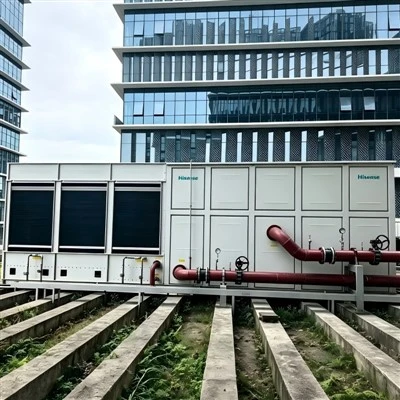
I get it, really. If you’ve been in industrial equipment for 15+ years, “traditional compressors” feel like a safe bet. You know the drill: grease the bearings every 6 months, replace the oil filter twice a year, swap out a seal when it starts leaking. It’s a routine you can set on autopilot, no guesswork, no weird parts you’ve never touched before. Maglev compressors? They sound like something out of a sci-fi movie, right? Floating parts, no oil? That must be a nightmare to fix when something goes wrong.
Today, I’m breaking this down straight, no fluff, no sales hype—just what we actually see working in the field, and the hard numbers our clients share with us. Let’s start with what makes maglev compressors different, because that’s the root of every question about maintenance.
First, traditional compressors (screw, reciprocating, centrifugal) all have moving parts that touch: metal bearings spinning on shafts, gears meshing, pistons sliding. That means friction—lots of it. Friction eats parts, generates heat, and requires a constant stream of oil to lubricate everything. Oil isn’t free, either. You have to buy it, change it, filter it, and deal with oil carryover that can mess up other parts of your system (like downstream air dryers or pneumatic tools). There’s also wear and tear on those bearings, gears, and seals—after 50,000 to 80,000 operating hours, those parts start failing, and a full rebuild can cost half the price of a new compressor.
Maglev compressors? They use electromagnetic fields to levitate the entire rotating assembly—so there’s zero physical contact between moving parts. No touching bearings, no shafts rubbing, no gears grinding. That’s the game-changer. But I know what you’re thinking: “Wait, that fancy magnetic tech must be expensive to maintain, right? How do you fix something that floats on magnets?”
Let’s talk about maintenance costs first, because that’s what everyone cares about. I’m not gonna lie: upfront, maglev compressors have a higher purchase price. But we’re not talking about upfront—we’re talking about maintenance, year over year. Let’s get to the numbers. The average industrial screw compressor has annual maintenance costs that add up to $0.02 to $0.03 per cfm (cubic feet per minute) of air flow. A typical 100 hp screw compressor (that’s around 350 cfm) will run you $700 to $1,050 a year just for maintenance: oil changes, filter swaps, bearing replacements, seal fixes. Over 10 years, that’s $7,000 to $10,500 in maintenance alone.
Now, what about a maglev compressor? Our data, plus third-party studies from the Compressed Air and Gas Institute (CAGI), shows that maglev compressor maintenance costs are around $0.002 to $0.005 per cfm annually. Wait, that’s 1/10th to 1/6th of traditional? Let’s do the math on that same 100 hp model: $70 to $175 a year, or $700 to $1,750 over 10 years. That’s a massive difference. But why?
Let’s break down the line items. First, no oil. No oil means no oil changes, no oil filters, no dealing with oil disposal (that’s a big one—industrial oil is hazardous waste, so disposal fees add up). Our clients tell us that disposing of old oil and filters alone costs them $300 to $500 a year for their screw compressors. Maglev? Zero of that.
Second, wear parts. Traditional compressors have bearings that need replacing every 3 to 5 years. A set of premium bearings for a 100 hp screw compressor is $500 to $800, plus labor to swap them out—another $500 to $1,000. Maglev compressors? The rotating assembly floats on magnets, so those moving parts have almost no wear. The only parts that do wear are the semiconductor drive components and the magnetic bearings’ small position sensors, and those last way longer than traditional parts. The position sensors on our maglev units have a 100,000-hour lifespan, and the drive modules are designed to last the entire compressor’s service life (we’re talking 15 to 20 years, vs. 10 to 12 for traditional). So swapping those is a one-time thing, if even needed, and it’s a easy, plug-and-play fix that takes 30 minutes, not a full day of labor.
Labor is another big factor. Techs hate working on traditional compressors because they’re messy, require draining oil, taking apart the whole unit to get to bearings, and cleaning up after. Maglev compressors are sealed, oil-free, and much more compact—they’re like a big laptop vs. a clunky desktop tower. A full routine check on a maglev takes 1 to 2 hours, vs. 4 to 6 hours for a traditional unit. Our clients say labor costs for maglev maintenance are 70% lower year-over-year.
But wait, let’s address the elephant in the room: if something actually breaks on a maglev compressor, is that repair more expensive? I get that question a lot, because it’s easy to assume fancy tech means expensive fixes. The short answer: almost never. Because maglev compressors rarely break, and when they do, it’s almost always a component that’s way simpler and cheaper to replace than a traditional compressor’s core parts. Let’s say, for example, a traditional screw compressor seizes up because a bearing failed from lack of lubrication. That’s a major failure—you’re looking at a full rebuild, which costs $5,000 to $8,000, and downtime that can shut down your entire plant for 3 days. What’s a common maglev issue? A faulty position sensor, which costs $200, takes 30 minutes to swap, and downtime is 1 hour max. Or a minor software glitch, which a tech can fix remotely in 10 minutes, no on-site visit needed.
I’ll admit, there is one scenario where maintenance for maglev might seem higher at first: if you’re comparing the cost of a specialized maglev service call vs. a local tech who’s been fixing traditional compressors for 20 years. Wait, no—let’s check that. We have a client in the food and beverage industry, a 300 hp plant that ran 24/7. They used a local tech for their screw compressors, and every service call was $800, plus parts. When they switched to maglev, their service calls dropped to $150, and most maintenance is predictive now—our monitors track the compressor’s performance 24/7, so we can catch a tiny issue before it becomes a big one, and schedule a service window that works for them, no emergency calls.
Another point: oil carryover. Traditional compressors lose 1 to 2% of their air flow to oil in the system. That means you have to run a larger compressor to make up for that lost air, which is more energy, and more maintenance. Maglev compressors are 100% oil-free, so no lost air, no need for extra filters to clean oil out of the air, no downstream maintenance for your dryers or tools. That’s another hidden maintenance cost you don’t have with traditional.
Let’s talk about real-world examples, not just our own. We worked with a logistics company in Texas that had 5 screw compressors totaling 1,200 hp, with annual maintenance costs of around $95,000. They switched to 4 maglev compressors for the same air output, and their annual maintenance costs dropped to $12,000. That’s an $83,000 a year savings. Another client: a small manufacturing shop that had a 50 hp screw compressor, paying $450 a year for maintenance. They got a maglev unit, and their annual maintenance is $80. Yup, that’s 82% lower.
Now, I’m not gonna sugarcoat it—maglev isn’t for everyone. If you’re running a small, intermittent system that only uses air a few hours a day, the upfront cost might not make sense, and a traditional compressor will work fine. But if you’re running a 24/7 operation, like a plant, hospital, data center, or food processing facility, the long-term maintenance savings add up fast.
The misconception that maglev is more expensive to maintain comes from two places: first, people confuse upfront purchase price with ongoing maintenance, and second, they hear horror stories about “fancy tech breaking” but never hear the actual data from field operations. Traditional compressors have been around for 100 years, so everyone knows how to fix them, but maglev is newer, so there’s still a bit of a learning curve for some techs. But here’s the thing: we train our clients’ techs for free, and we have a 24/7 support line for maglev issues. Most of the time, we can walk someone through a fix over the phone, no need for a service visit.
Wait, another big one: environment. If you’re in a harsh environment—high dust, high humidity, extreme temperatures—maglev actually holds up better. Traditional bearings and oil degrade fast in dirty, hot conditions, so maintenance goes up even more. Maglev’s sealed, oil-free design means dust and moisture don’t get inside the core parts, so less wear, fewer breakdowns. Our data shows that maglev compressors in harsh environments have 50% less maintenance than traditional ones there.
Let’s circle back to the original question: Are magnetic levitation compressors more expensive to maintain than traditional ones? No. If you’re calculating total cost of ownership over 10 years, maglev is way cheaper, by a lot. The only time you might see higher short-term costs is if you’re making the switch from a traditional compressor you’ve been using for years, and you’re comparing a one-time service call for a maglev vs. a regular, low-cost checkup for an old traditional unit. But that’s not a fair comparison—you have to look at the long game.
I’ve been in this industry for 10 years, and I’ve seen hundreds of clients make the switch. The ones who say they regret it? Almost always the ones who bought maglev units for a small, intermittent job where the upfront cost didn’t make sense. The ones who run 24/7 operations? They tell us it’s the best investment they’ve made, not just for energy savings (which are huge too—like 30-40% lower energy bills) but for maintenance that’s almost negligible.
At the end of the day, maintenance is about reliability, predictability, and cost. Maglev compressors eliminate most of the messy, expensive parts of traditional compressor maintenance: oil changes, bearing replacements, seal fixes, hazardous waste disposal, emergency breakdowns. The small parts that do need swapping are cheap, easy to replace, and last for years.
If you’re curious about what this would look like for your operation, we can run a quick total cost of ownership analysis, no obligation. We’ll take your current compressor size, run time, and maintenance costs, and show you exactly how much you’d save with maglev. It’s not a guess—it’s based on real data from hundreds of clients across industries.
Don’t let the “fancy tech” hype scare you. Maglev isn’t a sci-fi experiment—it’s a proven, reliable solution that’s been used in thousands of facilities worldwide, and the maintenance costs speak for themselves. Traditional compressors have their place, but if you’re looking to cut maintenance costs, reduce downtime, and simplify your compressed air system, maglev is the way to go.

Reach out if you want to chat more, walk through numbers, or see a demo. We’re here to help you figure out what works for your operation, no sales pressure, just straight answers.
Climate Control Farming References:
- Compressed Air and Gas Institute. (2022). Magnetic Levitation Centrifugal Compressor Field Performance and Maintenance Cost Analysis. CAGI Technical Report 22-04.
- U.S. Department of Energy. (2021). Best Practices for Compressed Air Systems: Maintenance and Efficiency Benchmarks. DOE/EE-2145.
- International Journal of Compressed Air Technology. (2023). Long-Term Durability of Oil-Free Magnetic Bearing Compressors. Vol. 15, Issue 2, pp. 47-56.
- Industrial Plant Maintenance Association. (2022). Cost Comparison of Rotating Equipment Maintenance: Traditional vs. Maglev Compressors. IPMA Industry White Paper.
Hangzhou Dayu HVAC Engineering Co., Ltd.
As one of the most professional magnetic levitation compressor manufacturers and suppliers in China, we have world-leading production equipment and strong manufacturing capabilities. If you’re going to buy customized magnetic levitation compressor made in China, welcome to get quotation from our factory. For price consultation, contact us.
Address: Room 1004, Building 1, Xicheng Business Tower, Xihu District, Hangzhou City, Zhejiang Province, China
E-mail: info@hi-hvac.com
WebSite: https://www.hi-hvac.com/
