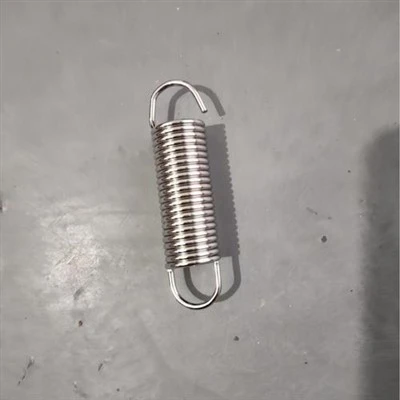
As a supplier of Special Springs, I’ve witnessed firsthand the profound impact of technology on our understanding and optimization of these remarkable components. Special Springs are a critical part of countless industries, from automotive to aerospace, and their performance can significantly influence the functionality of the end products. In this blog, I’ll explore how technology has been a game – changer in better understanding the Special Spring, and how it benefits our customers. Special Spring
Advanced Materials Analysis
One of the most significant advancements in understanding Special Springs is the use of technology for materials analysis. Special Springs are often made from a wide range of alloys and composite materials, each with unique properties. Through modern techniques such as X – ray diffraction, electron microscopy, and spectroscopy, we can precisely determine the chemical composition and microstructure of the spring materials.
X – ray diffraction allows us to analyze the crystal structure of the metal alloys used in Special Springs. This is crucial because the crystal structure affects the mechanical properties of the spring, such as its strength, ductility, and elasticity. For example, a fine – grained crystal structure often results in higher strength, while a more coarse – grained structure may provide better ductility. By precisely understanding the crystal structure, we can select the most appropriate material for a specific spring application, ensuring optimal performance.
Electron microscopy, including scanning electron microscopy (SEM) and transmission electron microscopy (TEM), provides a detailed view of the material’s surface and internal structure at a microscopic level. SEM can show surface defects, such as cracks or inclusions, which could potentially weaken the spring. TEM, on the other hand, can reveal the atomic arrangement and dislocation movements within the material. These insights help us understand how the spring responds to stress and strain, and how to improve its durability.
Spectroscopy techniques, like energy – dispersive X – ray spectroscopy (EDS), are used to determine the elemental composition of the spring materials. This is important because even small variations in the elemental content can have a significant impact on the spring’s properties. For instance, the presence of certain trace elements can enhance corrosion resistance or improve the spring’s ability to withstand high temperatures.
Finite Element Analysis (FEA)
Finite Element Analysis is another powerful technology that has revolutionized our understanding of Special Springs. FEA is a numerical method used to simulate the behavior of a structure under various loading conditions. In the context of Special Springs, FEA allows us to predict how a spring will deform, stress, and strain when subjected to different forces.
By creating a detailed 3D model of the spring and applying appropriate boundary conditions and loads in the FEA software, we can obtain a comprehensive understanding of its mechanical behavior. For example, we can analyze how a compression spring will compress under a specific load, or how a torsion spring will twist. This information is invaluable for designing springs that meet the exact requirements of our customers.
FEA also helps us optimize the design of Special Springs. We can test different geometries, such as the spring’s pitch, diameter, and number of coils, to find the best combination that provides the desired performance. Additionally, FEA can be used to identify potential weak points in the spring design. By analyzing the stress distribution within the spring, we can modify the design to reduce stress concentrations, which can lead to premature failure.
Non – Destructive Testing (NDT)
Non – Destructive Testing technologies play a crucial role in ensuring the quality and reliability of Special Springs. NDT methods allow us to inspect the springs for internal and surface defects without causing any damage to the component. This is essential because even a small defect in a spring can lead to its failure, which could have serious consequences in critical applications.
Ultrasonic testing is one of the most commonly used NDT methods for Special Springs. It uses high – frequency sound waves to detect internal defects, such as cracks or voids. The sound waves are transmitted through the spring, and any reflections from defects are detected by a receiver. By analyzing the pattern of the reflected waves, we can determine the size, location, and orientation of the defect.
Magnetic particle inspection is another effective NDT method for ferromagnetic springs. In this process, the spring is magnetized, and iron particles are applied to its surface. If there is a surface or near – surface defect, the magnetic field will be disrupted, causing the iron particles to accumulate at the defect site, making it visible.
Eddy current testing is suitable for detecting surface and near – surface defects in non – ferromagnetic springs. It works by inducing an alternating current in the spring, which creates an eddy current. Any changes in the eddy current caused by a defect can be detected and analyzed.
Real – Time Monitoring and Data Analytics
With the advent of the Internet of Things (IoT), real – time monitoring of Special Springs has become a reality. By embedding sensors in the springs, we can collect data on their performance, such as stress, strain, temperature, and vibration, in real – time. This data is then transmitted to a central system for analysis.
Real – time monitoring allows us to detect any abnormal behavior of the springs early on. For example, if a spring is experiencing excessive stress or vibration, it could be a sign of a problem, such as misalignment or overloading. By detecting these issues in real – time, we can take preventive measures to avoid spring failure.
Data analytics plays a crucial role in making sense of the large amounts of data collected from the sensors. By using advanced algorithms and machine learning techniques, we can identify patterns and trends in the data. For example, we can predict the remaining useful life of a spring based on its historical performance data. This information is extremely valuable for maintenance planning, as it allows us to schedule maintenance activities at the right time, reducing downtime and costs.
3D Printing and Prototyping
3D printing technology has opened up new possibilities in the design and production of Special Springs. It allows us to rapidly create complex spring geometries that would be difficult or impossible to manufacture using traditional methods.
3D printing enables us to produce prototypes of Special Springs quickly and cost – effectively. This is especially useful in the design phase, as it allows us to test different designs and make modifications based on the test results. We can also use 3D printing to produce small batches of custom – made springs for specific applications.
In addition, 3D printing can be used to optimize the material usage in spring production. By using a process called topology optimization, we can design springs with a more efficient material distribution, reducing the weight and cost of the spring without sacrificing its performance.
Conclusion
Technology has had a profound impact on our understanding of Special Springs. From advanced materials analysis and FEA to NDT, real – time monitoring, and 3D printing, these technologies have enabled us to design, produce, and maintain Special Springs with greater precision and reliability.
As a supplier of Special Springs, we are committed to leveraging these technologies to provide our customers with the best possible products. We understand that each customer has unique requirements, and we use these technological tools to develop springs that meet those specific needs.
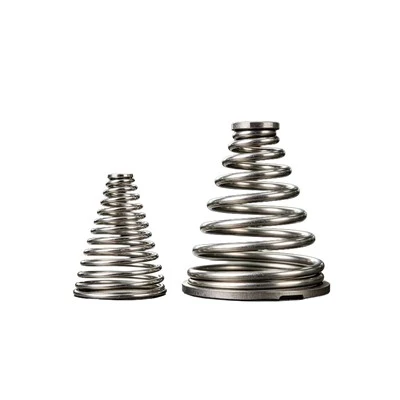
Spiral Spring If you are in the market for high – quality Special Springs, we invite you to engage with us for procurement discussions. Our team of experts is ready to work with you to understand your needs and provide you with the most suitable solutions.
References
- "Materials Science and Engineering: An Introduction" by William D. Callister Jr. and David G. Rethwisch
- "Finite Element Analysis: Theory and Application with ANSYS" by J. N. Reddy
- "Non – Destructive Testing Handbook" by American Society for Nondestructive Testing
- "Additive Manufacturing Technologies: 3D Printing, Rapid Prototyping, and Direct Digital Manufacturing" by Ian Gibson, David W. Rosen, and Brent Stucker
Shengzhou Deyuxiang Hardware Accessories Co., Ltd.
We are one of the most professional special spring manufacturers and suppliers in China, also support customized service. With abundant experience, we warmly welcome you to buy high quality special spring made in China here and get pricelist from our factory. For price consultation, contact us.
Address: No. 38, Caosheng Road, Caoqiao Street, Pinghu City, Jiaxing City, Zhejiang Province
E-mail: 877286126@qq.com
WebSite: https://www.dyx-spring.com/
